

Durable Boat Flag Hardware: Marine Guide
A generic flag mount might look fine at the dock, but it becomes a dangerous liability the moment you throttle up to 40 mph. For many boaters, the sight of a snapped bracket or rust stains bleeding onto a white gelcoat is a frustratingly common experience. You shouldn't have to choose between flying your colors and protecting your boat's finish. Finding truly durable boat flag hardware requires moving past mass-produced, generic alternatives and looking toward specialized engineering. It's about choosing hardware that matches the premium build of your vessel and stays silent even in heavy chop.
We understand that a flag isn't just a piece of fabric; it's a statement of pride that deserves a secure foundation. In this guide, we'll explore the material science behind 316 stainless steel and the mechanical standards, such as those inspired by ABYC H-41, that ensure your equipment won't fail under a 400-pound load. You'll discover how custom-fit brackets eliminate the rattling and slipping common with generic hardware. This article provides the technical knowledge you need to achieve a "buy it once" solution, giving you total peace of mind while you're cruising at high speeds in harsh saltwater environments.
Table of Contents
Why Standard Marine Hardware Fails in High-Speed Environments
Most retail flag mounts are designed for backyard porches, not the open water. When you mount a generic bracket to a wakeboard tower, you're fighting a losing battle against physics. Durable boat flag hardware must withstand forces that would buckle standard household fixtures in seconds. The difference between a "marine-style" accessory and a purpose-built component is often the difference between a successful day on the lake and a damaged boat tower.
Corrosion and the Chemical Reality of Salt Air
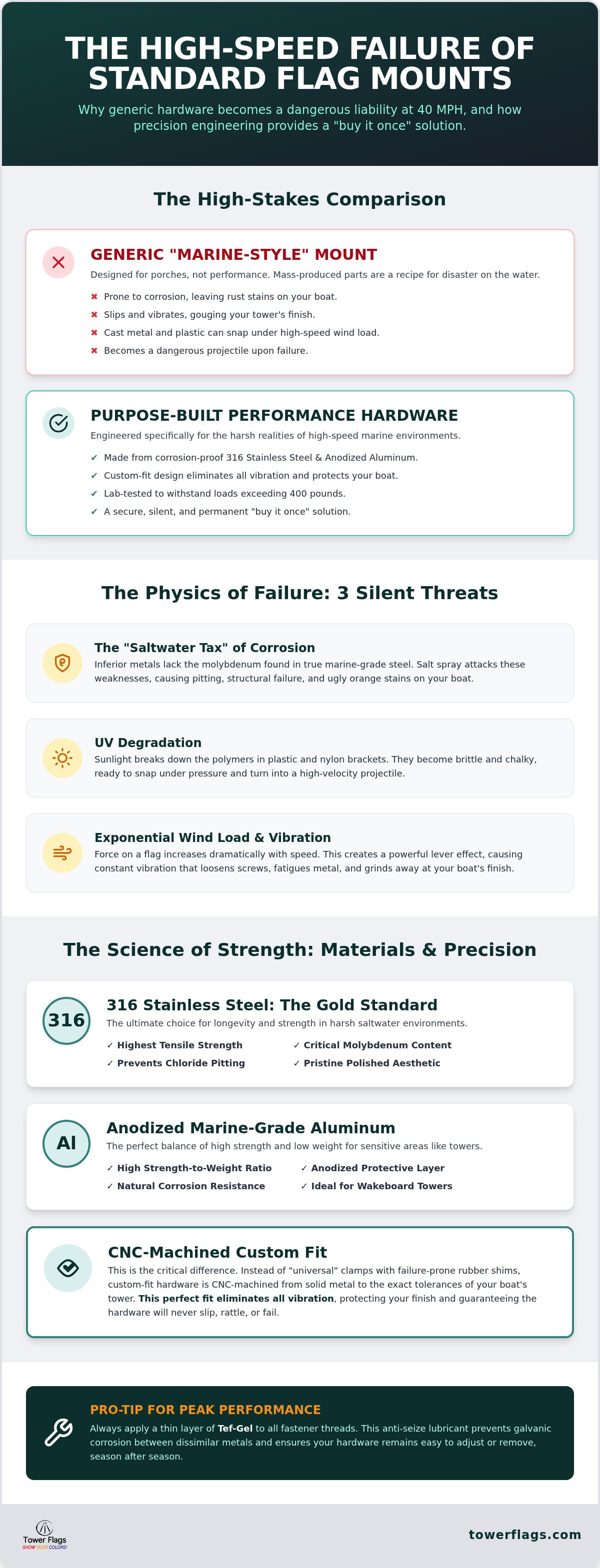
Saltwater acts as a powerful electrolyte. When inferior metals are exposed to salt spray, they undergo galvanic corrosion. This "saltwater tax" quickly turns shiny finishes into pitted, orange-stained eyesores. While many products claim to be rust-resistant, they lack the molybdenum content found in true marine-grade stainless steel. This specific chemical composition is what prevents pitting and structural weakening over time. Without it, the hardware's integrity is compromised from the first day it hits the water.
UV degradation is another silent threat. Plastic and nylon brackets often seem like cost-effective alternatives, but they're temporary fixes at best. Prolonged exposure to direct sunlight breaks down the polymers in these materials. They become brittle and chalky, eventually snapping under the pressure of a high-speed run. A hardware failure at 40 mph doesn't just mean a lost flag; it often results in the bracket itself becoming a projectile.
High-Speed Stress and Structural Integrity
Wind load increases exponentially with speed. A flag flying at 30 knots experiences significantly more drag than one at a slow idle. This constant tugging creates a powerful lever effect on the mounting hardware. If the bracket doesn't fit the tower perfectly, this force translates into vibration. Vibration is the primary cause of hardware failure in marine environments. It backs out mounting screws and causes metal fatigue in thin-walled poles that aren't engineered for the load.
Investing in durable boat flag hardware means choosing components that are CNC-machined to exact tolerances rather than mass-produced. Generic mounts rely on rubber shims or "universal" clamps that inevitably slip under pressure. This movement is more than an annoyance. It causes the hardware to rub against the boat's finish, gouging powder coating or cracking the gelcoat. To ensure your equipment stays secure, you need hardware that addresses these specific mechanical realities:
Structural Fatigue: Cast metals often crack under the repetitive stress of wave impacts.
Fastener Failure: Standard screws aren't designed to stay tight under the constant vibration of a marine engine.
Surface Friction: Loose-fitting brackets act like sandpaper on your boat's tower or deck.
Material Mismatch: Using the wrong alloys together can accelerate corrosion through electrolysis.
The Material Science of Durable Boat Flag Hardware
Selecting the right materials for durable boat flag hardware isn't a matter of style; it's a matter of mechanical survival. Precision-machined components offer a level of structural integrity that cast-metal alternatives simply cannot match. Cast parts often hide internal porosity and microscopic air pockets that become failure points under the constant stress of wave impacts. By contrast, machining from solid blocks of metal ensures consistent density and superior tensile strength, preventing the sudden fractures that plague mass-produced gear.
Stainless Steel vs. Aluminum: Which Should You Choose?
The choice between 316 stainless steel and marine-grade aluminum usually comes down to the specific application on your vessel. 316 stainless steel is defined as the primary choice for saltwater longevity because its molybdenum content provides a critical defense against chloride-induced pitting. It offers the highest tensile strength and a polished aesthetic that remains pristine for years with minimal maintenance. While heavier than aluminum, its sheer durability makes it the ideal material for permanent mounts that must endure constant exposure.
Marine-grade aluminum, particularly when anodized, serves as an excellent alternative for weight-sensitive areas like wakeboard towers. It provides a high strength-to-weight ratio and natural corrosion resistance, though it lacks the ultimate hardness of stainless steel. When selecting materials, we look to American Boat and Yacht Council (ABYC) standards to ensure the hardware can withstand the specific loads encountered in open water. For those seeking the ultimate in reliability, our custom-fabricated flag pole brackets utilize these high-performance alloys to eliminate the risk of failure at high speeds.
The Rise of Advanced Composites in Marine Hardware
While metals dominate the brackets, carbon fiber has become the preferred material for high-performance flag poles. The primary benefit is the weight-to-strength ratio. A carbon fiber pole is significantly lighter than its aluminum or fiberglass counterparts, which is vital for reducing the "whip effect." This effect occurs during sudden acceleration or when navigating heavy chop, where the mass of the pole creates a momentum that can strain both the bracket and the boat tower itself.
Reducing the top-heavy mass of the flag assembly minimizes vibration and prevents the hardware from loosening over time. Carbon fiber doesn't just offer strength; it provides a modern, high-tech appearance that complements the lines of premium tow boats. By combining a carbon fiber pole with a precision-machined stainless mount, you create a system that remains secure and silent regardless of how hard you push the throttle.
Precision Engineering: Why Custom Fit Beats Universal Brackets
Universal fit hardware is a compromise designed for retail shelf space, not for the specific geometry of your boat. When you rely on "one size fits most" clamps, you're introducing a gap between the mount and the tower. This gap is where durable boat flag hardware often fails. A loose fit allows for micro-movements that, over time, act like a hammer against your tower's finish. True precision engineering focuses on maximizing surface area contact to distribute load and eliminate vibration.
The Problem with "One Size Fits Most" Mounts
Generic mounts usually rely on rubber shims or plastic spacers to bridge the gap between a standard clamp and your tower's diameter. These shims compress and degrade under the heat of the sun and the pressure of 40 mph wind loads. As the shim thins, the bracket begins to rattle. Many boaters attempt to fix this by over-tightening the mounting bolts. This doesn't solve the problem; it merely creates high-pressure points that can mar the powder coating or even dent the aluminum tubing. Choosing custom boat flag brackets ensures that the hardware functions as a structural extension of the boat rather than an unstable add-on.
Securing Hardware to Specialized Wakeboard Towers
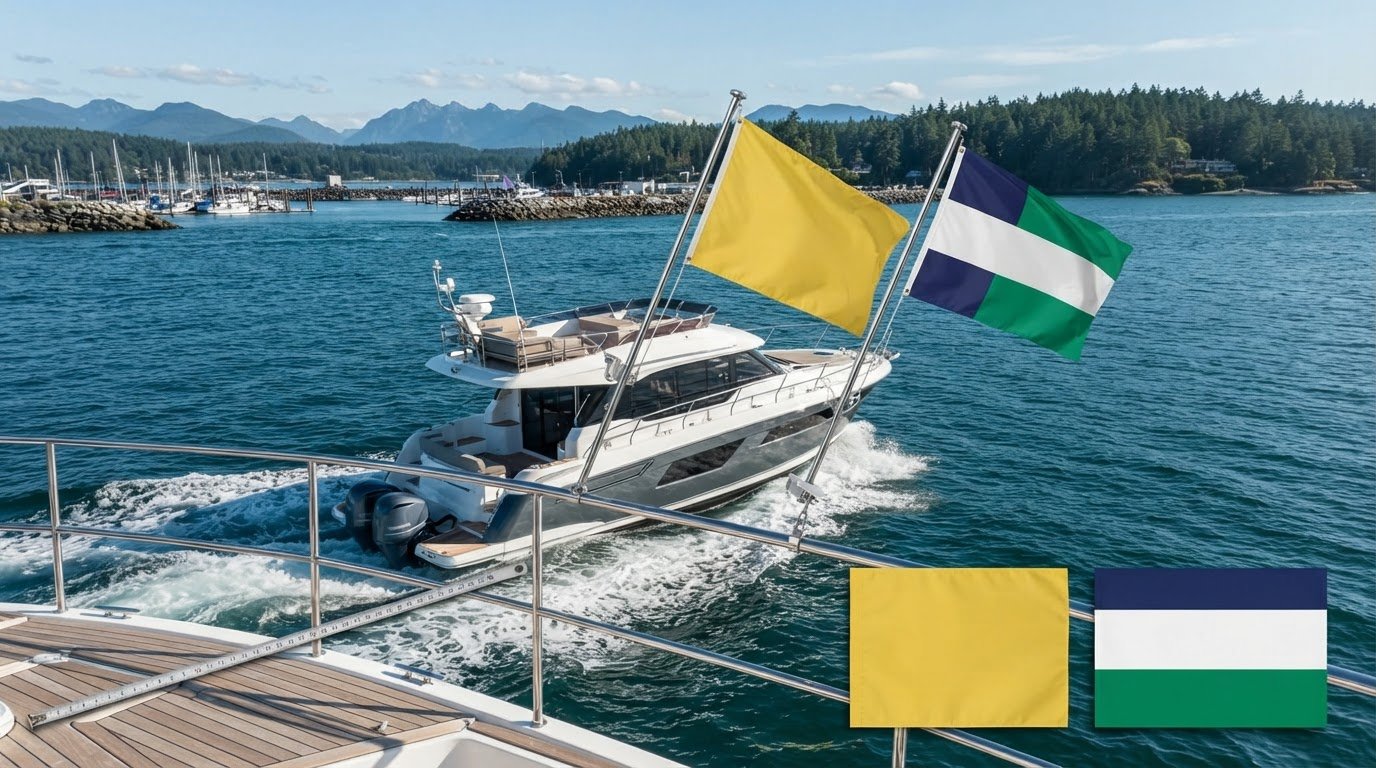
Modern wakeboard towers, such as the Malibu G3 or MasterCraft's Z-series, feature unique diameters and tapered profiles that universal hardware simply cannot accommodate. A standard clamp might fit the base but slip as the tower narrows. Custom fabrication accounts for these specific dimensions, ensuring a flush fit that won't budge regardless of the cruising speed. While we've previously addressed the chemistry of metal corrosion in marine environments, the mechanical fit is just as critical for preventing surface damage.
A precision-fit sleeve offers a significant engineering advantage over a basic clamp. It provides 360 degrees of contact, which prevents the hardware from twisting or shifting during sharp turns. This low-profile approach also ensures that the mount doesn't interfere with essential equipment like tower speakers or bimini tops. By prioritizing a specialized fit, you protect your boat's aesthetic and structural integrity. This results in durable boat flag hardware that matches the premium quality of your vessel and provides a seamless, factory-installed look.
Practical Guidance for Choosing and Maintaining Your Hardware
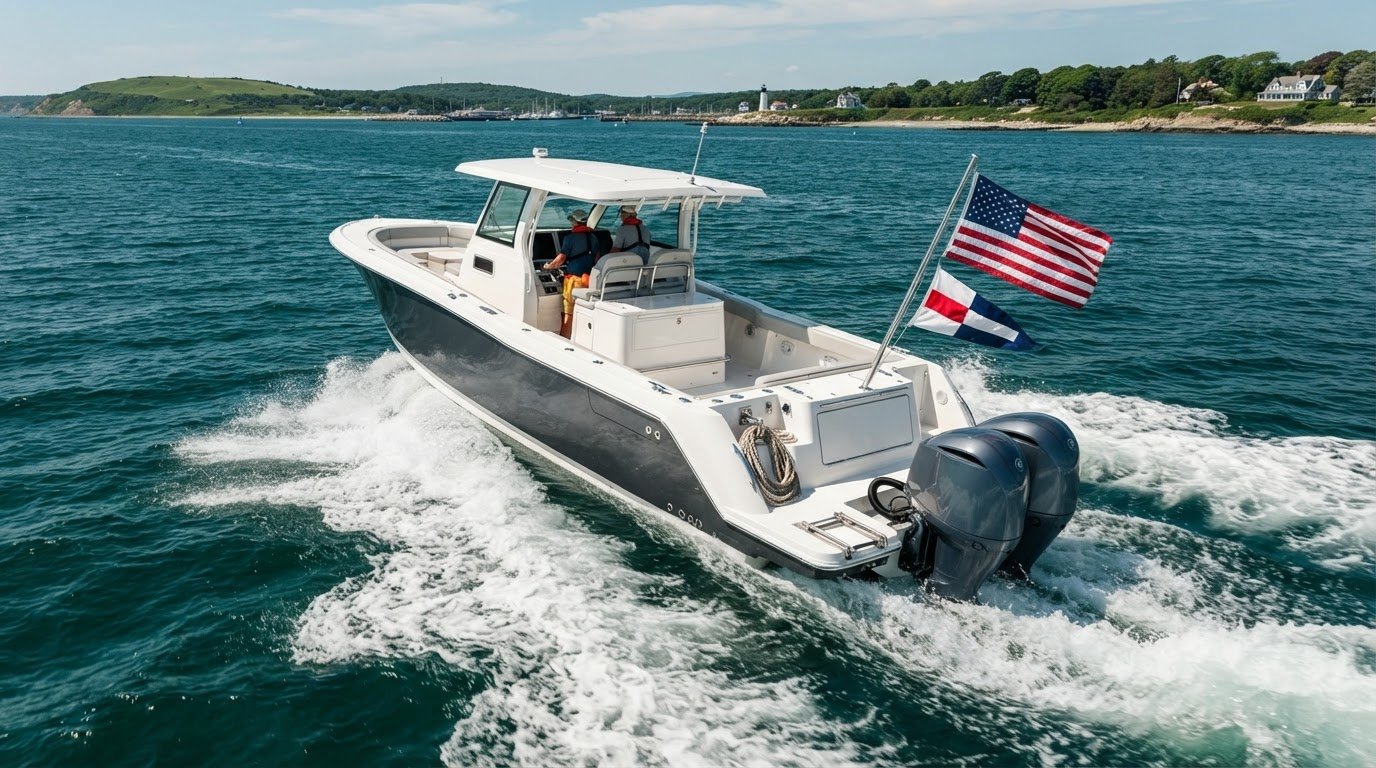
Choosing the right hardware depends on your cruising profile. A pontoon on a calm lake has different requirements than a wake boat hitting 40 mph in heavy chop. If you regularly cruise at high speeds, you need durable boat flag hardware engineered to handle the increased drag. Match your brackets to the exact diameter of your tower and ensure the pole is rated for your top speed. This prevents the whip effect from compromising the mount's structural integrity or causing the pole to fail under load.
Installation Best Practices for Longevity
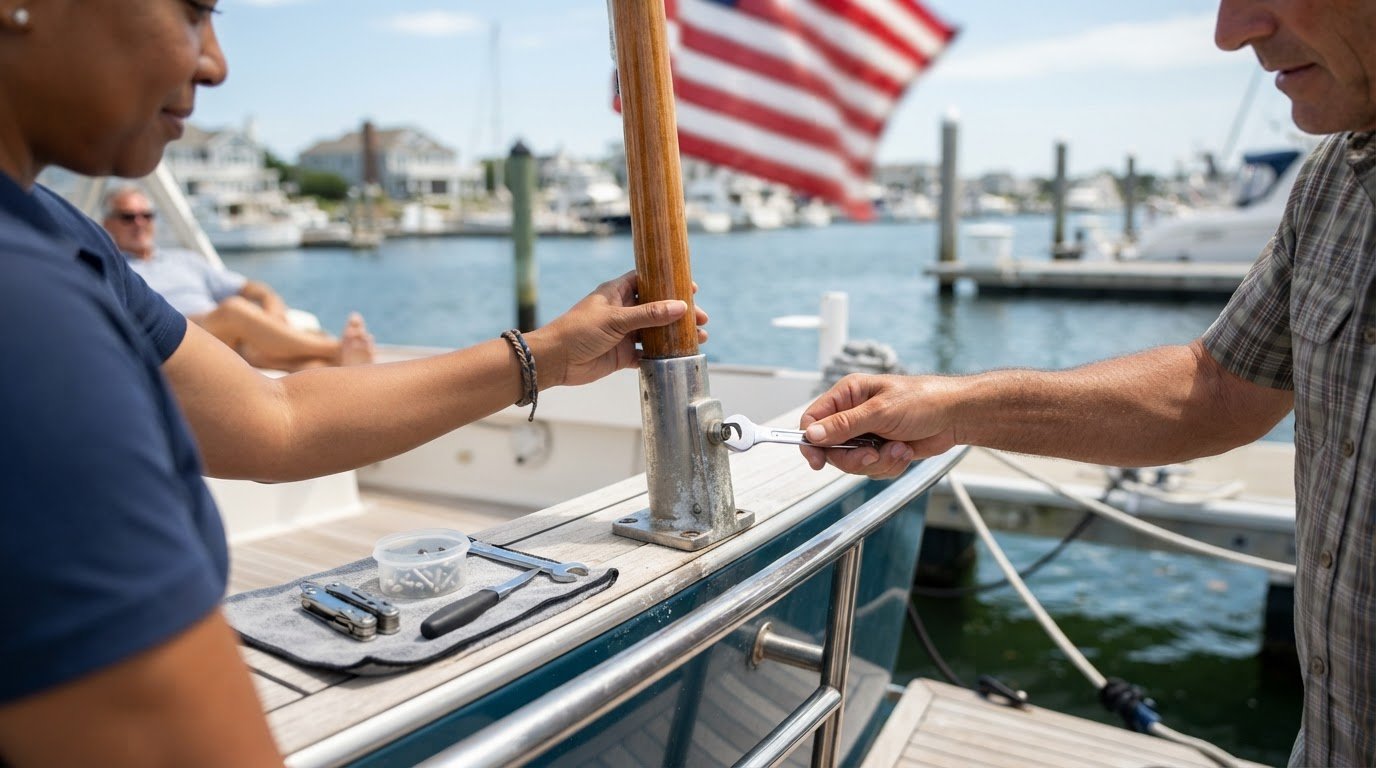
Hand-tightening is a common mistake that leads to lost gear. For high-speed performance, use a torque wrench to meet the manufacturer's specifications. This ensures the bracket stays seated without crushing the tower material. Always use rubber gaskets or specialized liners between the mount and the boat. These act as a buffer, preventing metal-on-metal contact that leads to galvanic corrosion and finish damage. Position your hardware where it faces the least amount of wind turbulence, typically away from the direct wake of the windshield or tower speakers.
Proactive Maintenance for Saltwater Boaters
Saltwater is relentless. To protect your investment, apply a high-quality anti-seize compound like Tef-Gel to all marine fasteners during installation. This prevents the "cold welding" effect where stainless steel bolts become permanently seized in aluminum threads. Routine inspections of your marine flag poles should focus on the attachment points and the physical integrity of the pole. Look for hairline cracks or signs of stress near the base where the leverage is highest.
A simple 30-second freshwater rinse after every outing is the most effective way to double the life of your hardware. This prevents salt crystals from forming in crevices, which is where crevice corrosion typically starts. If you notice early signs of pitting, which look like small dark spots or a rough sandpaper-like texture, clean the area with a dedicated marine stainless cleaner immediately. Replace mounting bolts every two to three seasons as a proactive safety measure, especially if they show any discoloration. Check the tension of your mounting screws monthly to ensure engine vibration hasn't backed them out.
If you're ready to upgrade to a system that won't fail, browse our custom flag pole brackets designed for high-speed reliability.
Tower Flags operates as a dedicated specialist workshop where the focus remains on engineering rather than just inventory. Our philosophy is rooted in the belief that a premium vessel deserves hardware of equal caliber. While mass-market retailers focus on universal compatibility to simplify their supply chains, we prioritize mechanical perfection for the individual boat owner. This shift from a "temporary fix" to a lifetime marine accessory is the cornerstone of our commitment to durable boat flag hardware.
The Manufacturing Process Behind Durable Hardware
Every bracket begins its journey in a high-precision CAD environment. We model the specific geometry and taper of industry-leading tower designs to ensure a zero-tolerance fit. Once the digital blueprints are perfected, we transition to CNC machining. This process carves each component from solid billet material, which provides a significant strength advantage over the porous, brittle nature of cast-metal alternatives. Our high-speed wakeboard tower flag mounts are developed to withstand the extreme vibrations and wind loads encountered at cruising speeds.
Quality control is not a final step in our workshop; it's an integrated part of the fabrication process. We inspect every thread and surface finish to ensure it meets our standards for high-performance marine use. By rejecting the "universal fit" model, we eliminate the need for unstable shims or oversized clamps that mar your boat's finish. The result is a piece of hardware that fits so precisely it feels like a factory-installed component rather than an aftermarket add-on.
Investing in Your Vessel’s Performance and Style
Choosing custom-fabricated hardware is a decision that enhances both the style and the functional reliability of your boat. A precision-machined mount offers a streamlined aesthetic that complements the clean lines of a modern tower. It looks intentional, reflecting the same level of craftsmanship found in the rest of your vessel. Beyond the visual benefits, this is a practical choice to minimize long-term maintenance and replacement costs. Most boaters find themselves caught in a cycle of replacing snapped plastic brackets or cleaning rust stains from inferior metals. By prioritizing American-made quality, you break that cycle.
This level of durability provides the peace of mind required for high-speed cruising and aggressive maneuvering. You won't have to glance back at your tower every time you hit a wake to ensure your flag is still there. You've invested in a solution that is built to last as long as the boat itself. Upgrade your vessel with Tower Flags custom hardware today.
Secure Your Flag with Precision Engineering
Flying your colors at high speeds shouldn't be a gamble. The difference between a failing bracket and a lifetime accessory lies in the intersection of material science and custom fabrication. Choosing 316 stainless steel and anodized aluminum ensures your equipment survives the relentless saltwater environment, while a precision fit eliminates the vibration that mars your tower's finish. You don't have to settle for the rattling and slipping common with generic, mass-produced mounts.
True durable boat flag hardware functions as a seamless extension of your vessel. It provides the structural integrity needed to withstand significant wind loads and the high-velocity resistance required for modern tow boats. By moving away from universal solutions and embracing specialized craftsmanship, you protect your boat's aesthetic and your own peace of mind. Our workshop is dedicated to providing these high-performance results through rigorous quality control and American-made materials.
Ready to eliminate the frustration of inferior marine gear? Shop Custom-Engineered Boat Flag Hardware today to find precision CNC machined brackets engineered for high-speed performance. We look forward to helping you make your next day on the water as secure as it is memorable.
Frequently Asked Questions
What is the best material for boat flag hardware in saltwater?
316 stainless steel is the superior choice for saltwater environments. Its specific chemical composition includes molybdenum, which provides essential resistance to chloride-induced pitting. While some manufacturers use 304 stainless to save costs, it won't survive long-term exposure to salt spray. For weight-sensitive areas like wakeboard towers, high-grade anodized aluminum is an excellent alternative. Both materials ensure your durable boat flag hardware remains structural and aesthetic for years without degrading or staining your deck.
Can I use a residential flagpole mount on my boat?
You shouldn't use residential hardware on a vessel. Home mounts are designed for static wind loads, not the dynamic forces of a boat traveling at 40 mph. Residential brackets often use cast zinc or thin-walled aluminum that snaps under high-speed pressure. Additionally, these materials lack the protective coatings needed to survive salt air. Investing in purpose-built marine equipment prevents the hardware from becoming a dangerous projectile while you're cruising or navigating rough water.
How do I stop my boat flag pole from rattling at high speeds?
Rattling is a symptom of a poor mechanical fit between the pole and the bracket. To stop the noise, replace universal mounts with precision-machined sleeves that offer 360 degrees of contact. If your current hardware uses rubber shims, check if they've compressed or degraded. A secure locking mechanism, like a stainless steel set screw or a tight-tolerance pin, ensures the pole stays silent. This stability protects your tower's finish from the friction caused by constant vibration.
What grade of stainless steel is best for marine flag brackets?
316 stainless steel is the only grade recommended for permanent marine installations. It's often labeled as "marine grade" because it can withstand constant contact with saltwater without rusting. Many retail products use 304 stainless, which looks identical but lacks the molybdenum needed to prevent crevice corrosion. If you want a "buy it once" solution, always verify that your mounting brackets are machined from 316 stainless steel to ensure they maintain their integrity in harsh conditions.
Do I need to drill holes in my boat tower to install a flag mount?
You don't need to drill into your tower if you choose the right mounting system. High-quality clamp-on brackets are designed to wrap securely around the tubing of wakeboard towers or rails. These mounts utilize precision-machined diameters to create a friction fit that won't slip or rotate. This approach allows you to display your flags proudly without making permanent modifications to your boat's structure, which helps maintain the vessel's resale value and aesthetic appeal over time.
How much wind speed can a durable boat flag pole handle?
A high-performance flag pole should handle combined speeds of at least 50 mph. This calculation includes your boat's cruising speed plus any potential headwind you encounter on the water. Durable boat flag hardware manufactured from carbon fiber or heavy-wall 6061 aluminum is specifically engineered to resist the "whip effect" that causes inferior poles to bend or snap. Always check the manufacturer's speed rating to ensure your equipment is safe for your typical cruising habits and conditions.
Why did my aluminum flag bracket turn white and powdery?
That white powder is aluminum oxide, which indicates that the metal's protective layer has failed. This usually happens with low-quality cast aluminum that hasn't been properly anodized or sealed. Once the raw aluminum is exposed to salt air and moisture, it begins to corrode and pit. To prevent this, stick with hardware that features a thick, hard-anodized finish or opt for 316 stainless steel, which doesn't rely on a surface coating for its corrosion resistance.
How often should I inspect my marine flag mounting hardware?
Perform a thorough inspection at least once a month during the boating season. Focus on the mounting bolts to ensure engine vibration hasn't loosened them. Check the bracket for hairline cracks and look for any signs of "tea staining" or pitting on the metal surfaces. A simple habit of rinsing your hardware with fresh water after every trip significantly reduces the risk of corrosion. Replacing your mounting fasteners every few seasons is a cheap way to ensure safety.
Comments