

Custom Flag Mounts Compared With Off-the-Shelf Options
An off-the-shelf mount isn’t automatically the simpler choice. The custom flag mount vs off-the-shelf decision comes down to how well the mount, pole, flag, and hardware fit the location and mounting surface. Standard hardware can work when its configuration suits the installation; a custom solution is useful when the setup needs a more specific fit.
A ready-made option may cover the basics, but the mounting conditions determine how the complete assembly needs to work. This guide explains how the location, surface, flag, and attachment hardware affect the choice, and what to consider when designing a custom mount. You’ll have a clearer way to choose a setup that suits the display and installation.
Table of Contents
How a professional helps choose flag size and mounting hardware for your location
The right setup matches the flag, pole, and mount to the display location and mounting surface. That helps determine whether standard hardware will fit or a custom design is better suited to the installation.
Flag Size and Mount Compatibility
Off-the-shelf options support common combinations, but fit depends on the mount, pole, flag attachment, and surface. For wall displays, listed flag sizes include 2′ × 3′, 3′ × 5′, 3′ × 6′, 4′ × 6′, 5′ × 8′, and 10′ × 15′. Header-and-grommet finishes commonly attach to house-mounted and in-ground poles. Pole sleeves and tabs suit some house-mounted poles and indoor flag sets.
A professional considers the display area and desired visibility before selecting dimensions. The pole and attachment style must also suit the flag. For example, a 3′ × 5′ flag and a 5′ × 8′ flag call for different display proportions. Standard mounts work when their supported setup fits; custom mounting addresses a specific mismatch.
Custom Mount Measurement Requirements
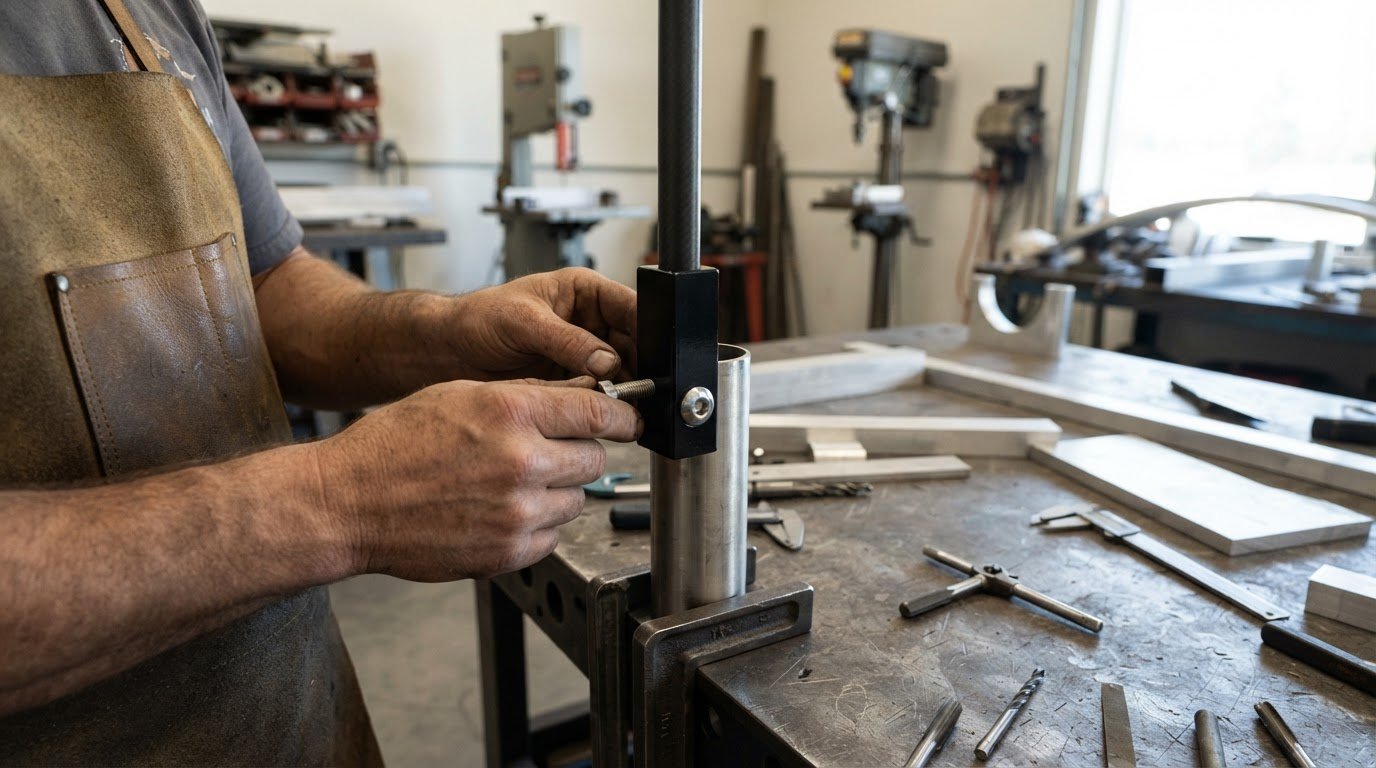
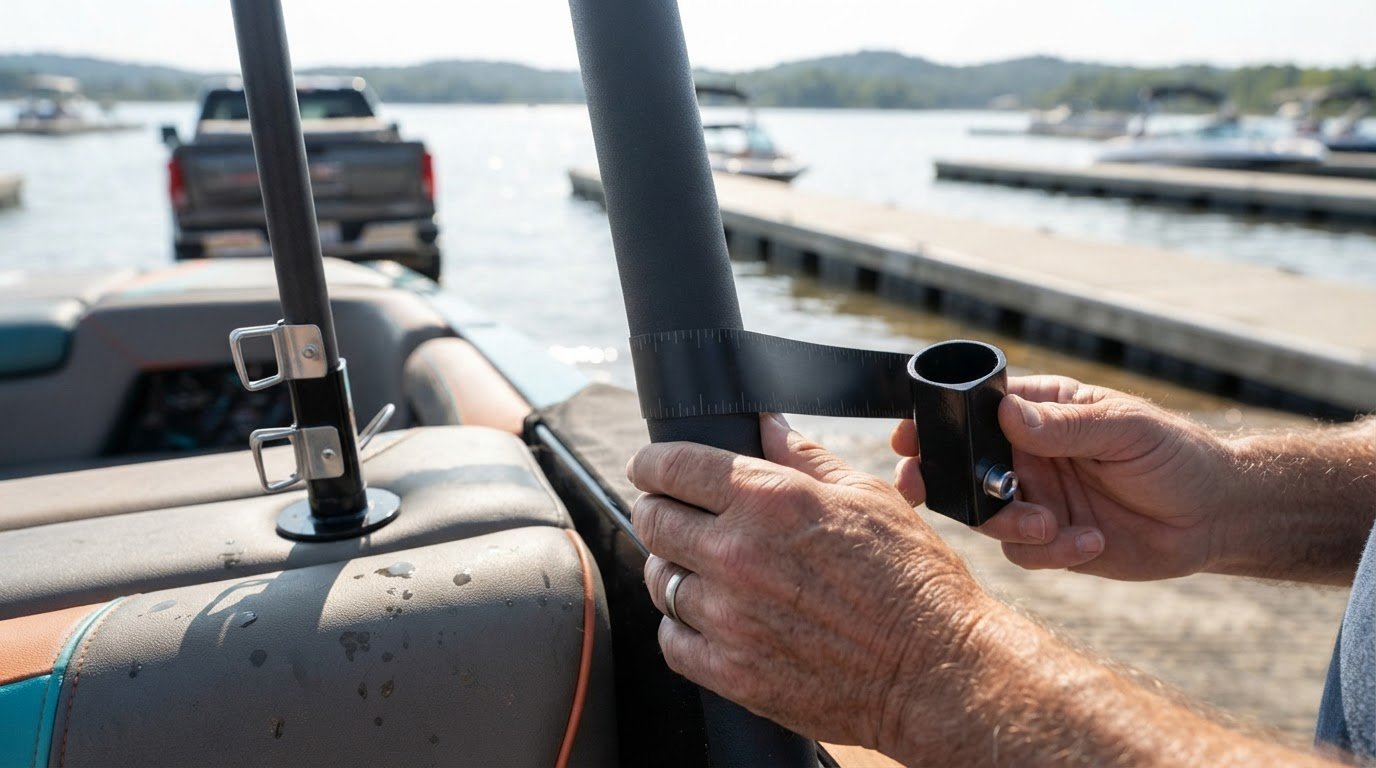
A custom mount requires measurements of both the installation surface and the intended pole fit. Note the available mounting area, the position and spacing of existing attachment points, and the pole dimensions. These details help shape the mount around the actual setup rather than an assumed standard.
Photos of the location can show nearby obstructions and the flag’s intended position. Consider these alongside the flag size and attachment style to define the design requirements. The details needed depend on the surface and mounting arrangement.
Durability and Weather Resistance
Custom and standard mounts can differ in fit, but neither category alone determines durability or weather resistance. These depend on materials, construction, exposure, and compatibility across the complete setup. A close-fitting custom design addresses a specific installation; a standard mount provides a ready-made configuration when it suits the same conditions.
For either option, consider the location’s exposure and how the flag, pole, and mount connect. Focus on the demands of the display rather than assuming custom hardware always lasts longer.
Local requirements can vary by property and installation. Before installing a mount in the United States, consider the applicable building requirements, HOA rules, and permit requirements for the location.
Custom design and manufacturing time depends on the design requirements and work involved. The sequence is determined by the required fit and specifications, not by a universal turnaround estimate.
How a professional selects hardware for different installation surfaces
Start with the mounting surface, then match the mount style to the pole and display. A wall, an open ground location, and a boat structure each have different attachment conditions. Account for the available mounting area, the support behind it, and the flag’s position.
For a wall, a bracket needs a suitable attachment area and enough clearance for the pole and flag. A ground-mounted flagpole uses a different support arrangement. Rotating arms and heavy-duty bases are other hardware options, each serving a different configuration. A professional compares these options against the actual site instead of assuming one mount suits every surface.
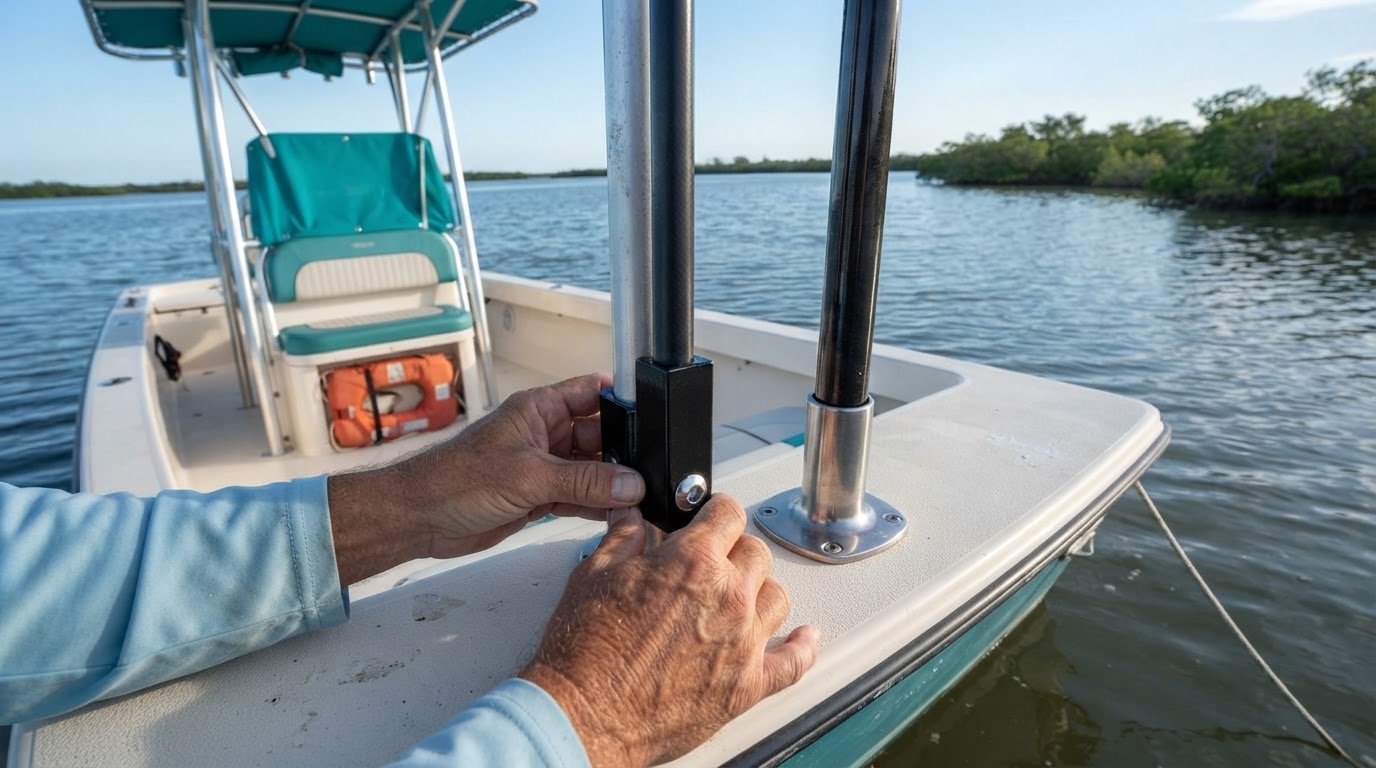
On a boat, the mounting location matters as much as the hardware type. The professional considers the structure available for attachment, nearby equipment, and the space needed for the flag to display. If a standard bracket does not align with the intended mounting area or pole, a custom design can address that mismatch. The goal is a durable connection suited to the installation, not simply a bracket that looks close.
Surface fit also affects installation risks. A poorly matched mount can shift, loosen, interfere with nearby equipment, or place stress on an unsuitable attachment area. A professional assesses the support, clearance, and hardware alignment before selecting the setup, helping prevent those problems without assuming every surface can use the same fixing method.
For example, a wall bracket may suit a clear wall display, while a ground-mounted pole fits an open site. A rotating arm or heavy-duty base may suit a different arrangement. Explore surface-matched flag hardware when comparing these mounting options.
Optional flag poles and mounts
Treat the pole and mount as a working pair, not separate add-ons. The right combination depends on where the flag will be displayed and how the pole will be supported. A ground-mounted flagpole, for example, calls for a different arrangement than a wall bracket. If a standard pairing doesn’t suit the installation, a custom mount can address the specific fit.
Start by identifying the mounting arrangement. Ground-mounted flagpoles, wall brackets, rotating arms, and heavy-duty bases suit different setups. A wall bracket supports a pole at a wall, while a ground-mounted pole places the display away from a building. A rotating arm or heavy-duty base may suit other configurations.
Ground-mounted flagpole: Consider this configuration when the display location is on the ground rather than on a wall.
Wall bracket: Pair it with a pole intended for a wall-mounted display, accounting for the available mounting area.
Rotating arm: Consider this hardware as a distinct mount option when comparing how the flag and pole will be arranged.
Heavy-duty base: Evaluate it as another support option when the installation calls for a base rather than a wall bracket.
Next, match the pole to the intended flag and mount. The attachment method matters: header-and-grommet flags commonly connect to house-mounted and in-ground poles, while sleeves and tabs are used with some house-mounted poles and indoor flag sets. That connection affects which pole and mount combination makes sense.
Off-the-shelf hardware is practical when its configuration fits the location and flag attachment. Consider a custom mount when the selected pole and standard mount don’t align with the installation. Compare the complete assembly to avoid choosing a pole first and then discovering its mount doesn’t suit the display.
What materials and finishes are available for custom and off-the-shelf flag mounts?
Material and finish choices depend on the mount’s design and intended location. Compare construction, surface treatment, exposure, and upkeep needs. A custom mount can be specified for the installation; an off-the-shelf mount comes in its designed configuration. Neither category alone determines which material or finish best suits the display.
Evaluate how the mount will be used before choosing a specification. A sheltered indoor display and an exposed outdoor installation have different conditions to account for. The finish affects the mount’s appearance and surface, while the material influences its physical properties. Consider these details together, not as separate cosmetic choices.
Material: Compare the mount’s construction with the intended use and support requirements.
Finish: Consider appearance, exposure, and the surface’s upkeep needs.
Fit: Check that the chosen specification works with the pole and installation surface.
Configuration: Decide whether a standard design fits or a custom mount better suits the setup.
For example, assess a mount intended for an exposed location against those conditions rather than choosing it by appearance alone. A custom design may better accommodate a particular installation, but customization does not automatically make every material or finish more durable. Construction, fit, and exposure all affect how well the assembly serves its purpose.
Compare the complete specification: the mount’s material and finish, its connection to the pole, and the demands of the location. These criteria provide a clearer basis for weighing custom against standard hardware. Use them to match the mount to the display rather than treating finish as a substitute for correct fit.
Explore flag mount options and consider how their construction and finish suit your intended installation.
Options vary with the mount’s design and location. Choose a material and surface treatment by considering exposure, upkeep, support needs, and compatibility with the pole and installation surface.
Tower Flags
Tower Flags helps boat owners match flag display components to their vessel and mounting setup. Its Flag Pole Brackets, Flag Poles, and Flags give readers a relevant starting point when a standard combination does not appear to suit the location. Consider how the bracket, pole, and flag work together, including the mounting surface and attachment style. That complete view can clarify whether an available option fits the display or a more tailored mounting solution is appropriate.
If you’re weighing a flag setup for your boat, share your requirements and discuss the relevant options with Contact Tower Flags.
Move from comparison to a clear specification
Choosing between a custom flag mount and an off-the-shelf option starts with defining what the complete display needs to do. Use that decision to set a clear direction for the project rather than choosing a mount in isolation. The right setup accounts for the flag, pole, bracket, and intended location as one assembly.
Tower Flags offers Flag Pole Brackets, Flag Poles, Flags, and a Gift Card. These products provide a starting point for planning a complete flag display. To discuss a combination for your setup, get in touch with the intended use and mounting context.
Contact Tower Flags about your mount to discuss the setup you have in mind. A clear project direction makes it easier to move forward with confidence.
Frequently Asked Questions
What is the difference between a custom flag mount and an off-the-shelf flag mount?
A custom flag mount is designed for a particular installation, while an off-the-shelf mount follows a preset configuration. For a boat tower, Tower Flags makes a tailored bracket to the tower’s exact specifications rather than relying on a universal pattern. Its threaded brackets and poles screw together, so they connect directly and can be installed or removed in seconds. The key difference is fit, not appearance.
How much does a custom flag mount cost compared with an off-the-shelf mount?
There isn’t one fixed cost relationship: an off-the-shelf mount uses a preset design, while a custom mount requires design and fabrication for a specified fit. The work involved, material choice, and how closely the mount must match the installation affect the cost of a custom option. Compare the complete assembly and its fit requirements, rather than treating the mount’s purchase price as the only factor.
When is a custom flag mount worth the extra cost?
Consider a custom mount when a standard configuration cannot match the tower or intended flag setup. Tower Flags designs brackets and poles to customers’ tower specifications, using a proprietary fabrication process that employs a high-strength carbon fiber composite. This option suits installations where precise fit and a direct pole-to-bracket connection matter more than preset hardware.
Comments