

Heavy Duty Marine Flag Mounting Hardware for Boats
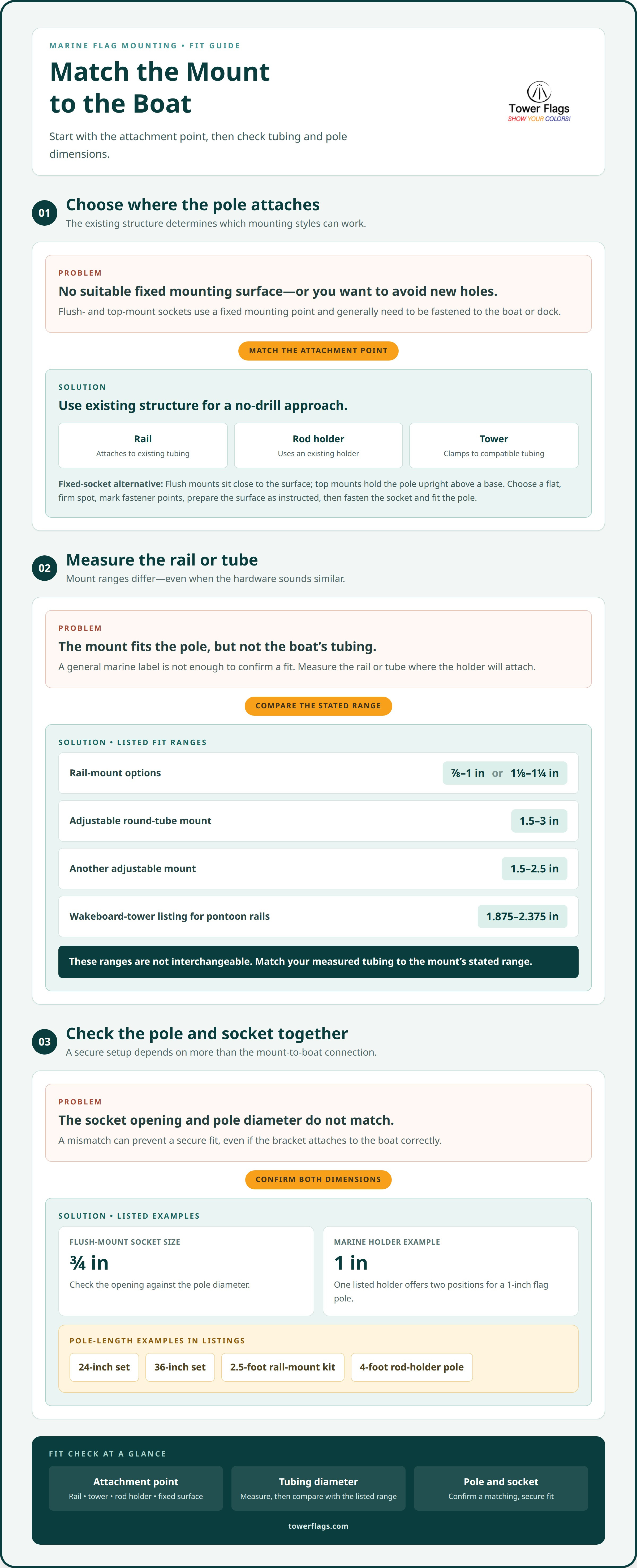
A boat flag pole doesn’t always need a hole in the deck. Heavy duty marine flag mounting hardware can attach to an existing rail, rod holder, or tower, while flush- and top-mount sockets need a fixed mounting surface. The right option depends on your boat’s existing attachment points and whether the mount fits the tubing and pole.
If you’d rather avoid drilling, choosing a mount that works with your boat’s existing structure is a practical place to start. This guide explains which mounting styles can offer a no-drill approach, how rail, transom, flush, and top mounts differ, and what to consider when comparing marine-grade materials. You’ll also learn how to narrow the options by matching the mount to your boat and flag pole, so you can browse hardware with a clearer idea of what will fit.
Table of Contents
Flush-mount and top-mount flagpole sockets
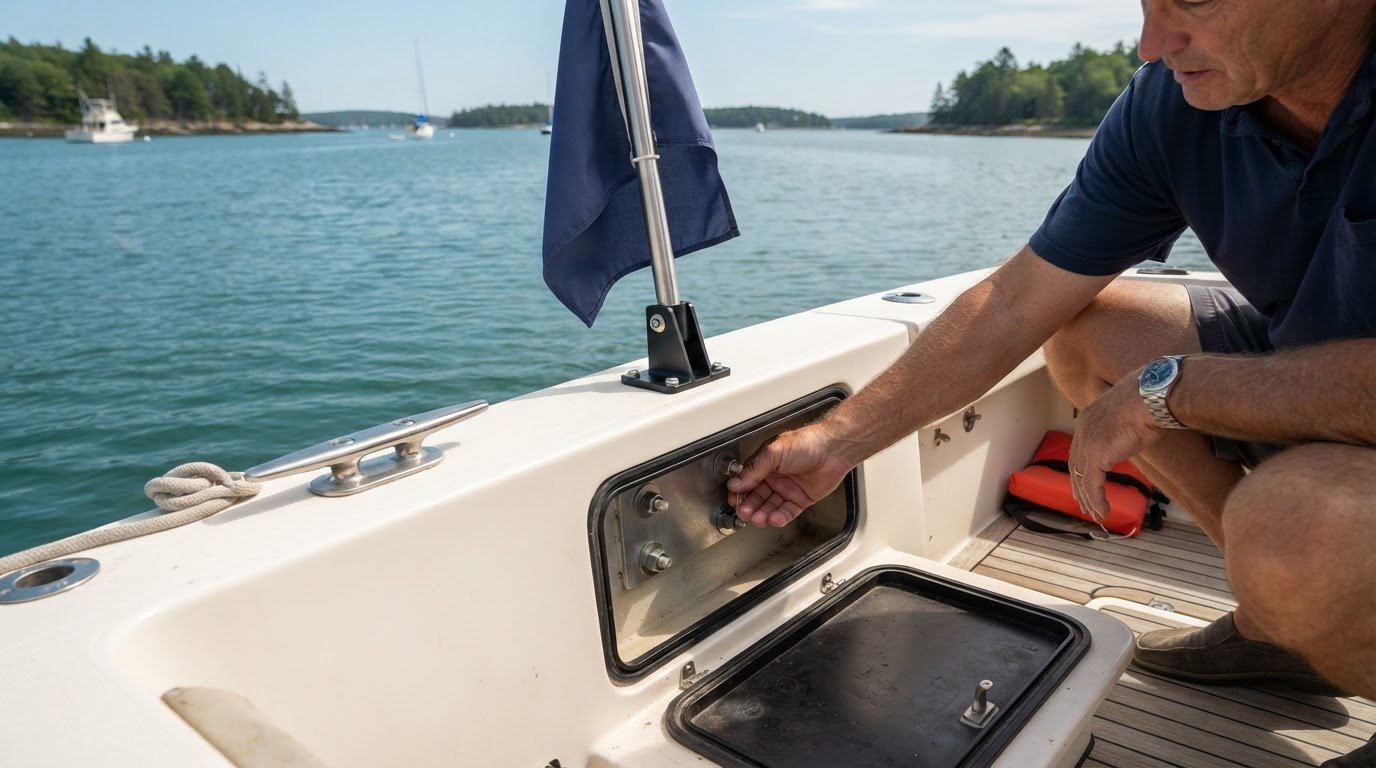
Install a heavy-duty flag mount by positioning its base, marking the fastener points, preparing the mounting surface, and securing the socket with suitable fasteners. For a boat or dock, choose the location first, then follow the socket’s instructions for the surface and hardware.
Flush-mount sockets sit close to the mounting surface, while top-mount sockets hold the pole upright above a base. Both use a fixed mounting point and generally need to be fastened to the boat or dock, rather than attached to existing tubing. If avoiding new holes is your priority, a rail or rod-holder mount may be a better fit.
A listed dock flagpole holder has a 5-by-5-inch base, giving you a concrete footprint to consider when choosing a dock location. Flush-mount sockets include a 3/4-inch size. Check that the socket opening matches the pole diameter; a mismatch can prevent a secure fit.
Choose the surface: Pick a flat, firm area on the boat or dock that accommodates the socket base.
Position the socket: Set the base where the pole will be visible and mark its fastener points.
Prepare the mount: Make the required openings and use fastening hardware suited to the mounting surface.
Secure and fit: Fasten the socket, then place the flag pole into its opening.
Socket details can also affect how the flag sits. One listed marine holder uses 316 stainless steel and offers two positions for a 1-inch flag pole. A transom-mount bracket described in the market has a five-inch set back, which changes how far the pole sits from the mounting edge. Compare the base footprint, pole diameter, and mounting position before choosing. These details help distinguish a close-fitting flush socket from a raised top-mount base and clarify whether the installation suits your boat or dock.
Marine-grade mounting materials
Material choice affects how a mount stands up to saltwater, routine cleaning, and the force of a raised flag. Consider the socket, bracket, clips, fasteners, and mounting surface as parts of one assembly.
Corrosion Prevention and Maintenance
A listed 1-inch flagpole holder bracket uses 316 stainless steel and includes a drain hole. The drain opening gives water a way out instead of leaving it trapped inside the holder. Flag clips are listed as 304 stainless steel, so distinguish clip material from bracket material when comparing hardware.
To maintain a mounted assembly, rinse away salt and grime, dry surfaces where water collects, and inspect exposed metal and fasteners. Look for rust stains, pitting, loose connections, or water trapped in the holder. A drain hole can help limit standing water, but regular cleaning and inspection are still important. Pay attention to contact points between different components, especially where moisture can collect.
Wind Loads and Mounting Safety
A flag catches wind and transfers force through the pole to its holder, fasteners, and mounting surface. The flag’s size and position, wind exposure, and mount rigidity all affect the load on the assembly. A material label alone can’t tell you how much wind a complete installation can withstand.
Assess the full connection rather than judging a bracket by appearance alone. Watch for movement at the base, flex at the mounting point, loose fasteners, or a pole shifting in its socket. These signs can indicate that the connection needs attention. Choose a setup suited to the flag and mounting location, and lower or remove the flag when conditions exceed what the assembly is designed to handle.
Material is only one part of corrosion control. The mounting surface, fasteners, drainage, and upkeep matter too. Even a stainless bracket can be undermined by a compromised base or neglected connection. Check the holder’s dimensions against the pole, then inspect the assembled fit for movement before raising the flag.
For example, a 1-inch holder with a drain hole pairs specific dimensions with a drainage feature. Confirm that the pole fits its holder and that the bracket sits firmly against its mounting surface. This practical comparison helps separate material choice from fit and installation quality, two distinct considerations when selecting marine mounting hardware.
Browsing flag pole and hardware products
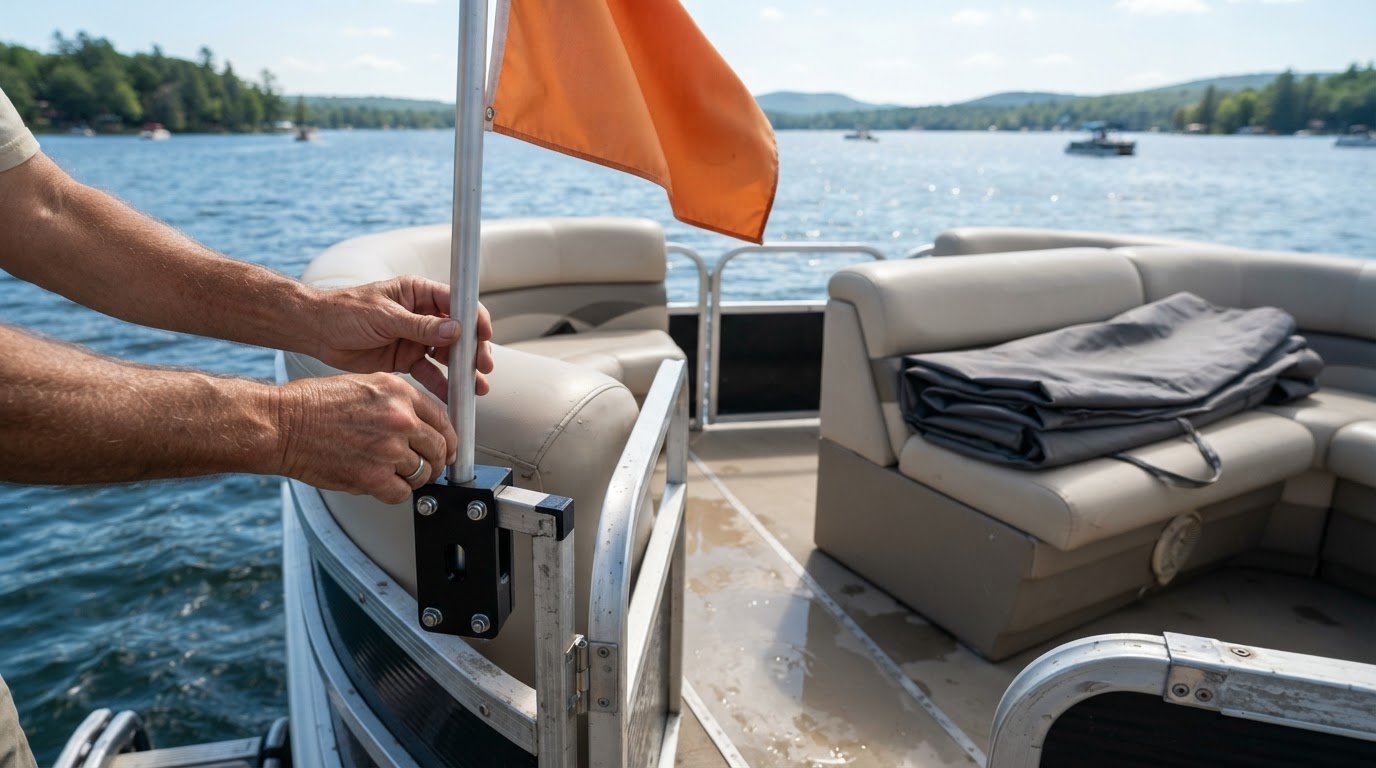
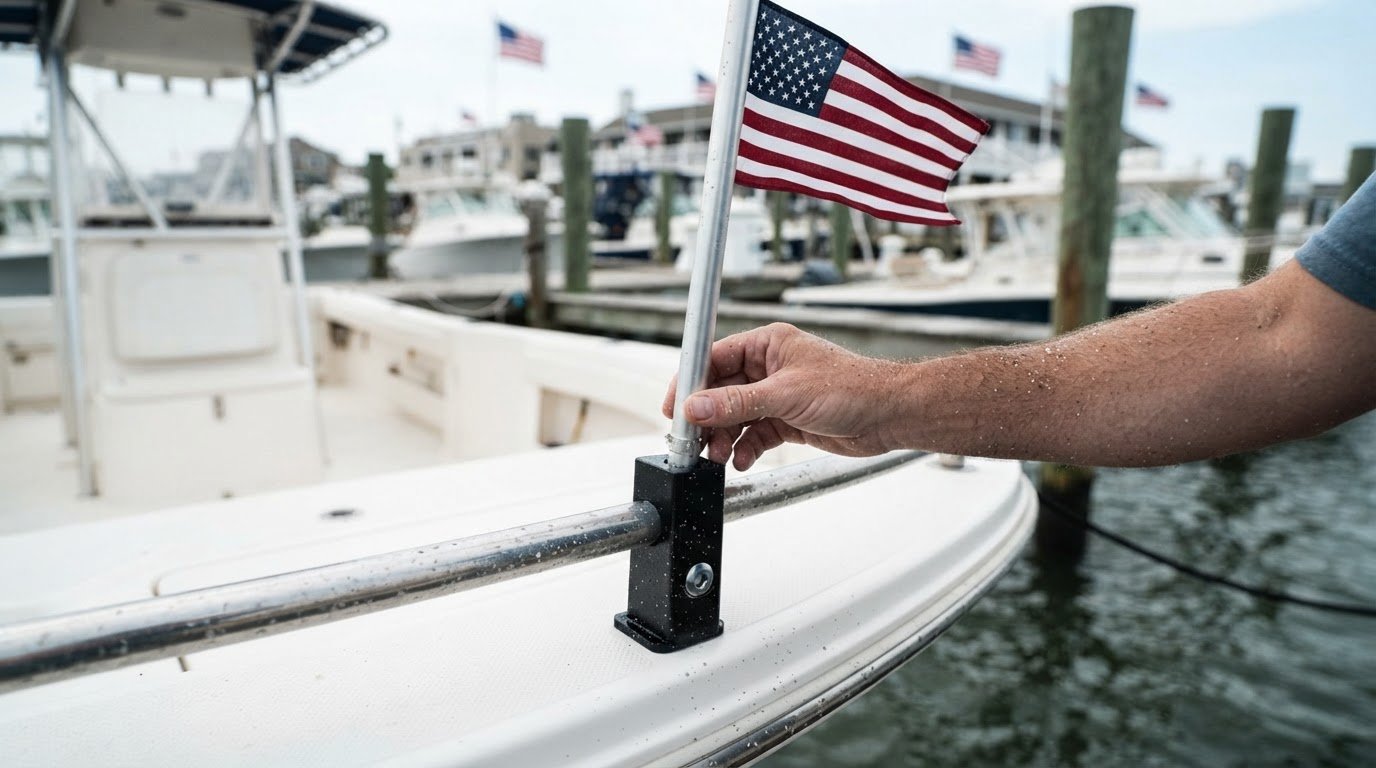
Start by matching the mount to an actual attachment point on your boat. Rail sockets, tower clamps, and rod-holder mounts suit different structures, so tubing diameter and pole fit matter more than a general marine label.
For rail mounts, listed options fit tubing from 7/8 inch to 1 inch, or from 1-1/8 inch to 1-1/4 inch. Measure the rail where the holder will attach, then compare that measurement with the mount’s stated range. A socket that fits the pole but not the rail won’t solve the mounting problem.
Tower and pontoon mounts use different tubing ranges. One adjustable mount fits round tubing from 1.5 to 3 inches; another is listed for tubing from 1.5 to 2.5 inches. Those ranges are not interchangeable. A wakeboard tower listing specifies pontoon rails from 1.875 to 2.375 inches, a narrower fit than the broader adjustable range.
Identify the attachment point: Choose rail, tower, or rod-holder mounting based on your boat’s existing structure.
Match the dimensions: Compare rail or tube diameter with the mount’s stated fit range.
Check pole length: Listed examples include 24-inch and 36-inch sets, a 2.5-foot rail-mount kit, and a 4-foot rod-holder pole.
For U.S. boating, distinguish legal requirements from flag etiquette. Requirements can depend on the flag and boating context; etiquette describes customary display, so a convention is not necessarily a universal legal rule. A product listing describes hardware, not the rules for displaying a particular flag.
Flag size also affects the overall setup. One stocked nylon boat flag measures 12 x 18 inches, while a listed pontoon kit pairs a mount with a 12-by-18-inch U.S. flag. Treat that as an example, not a universal size. Before selecting hardware, match the attachment point, mount range, pole length, and intended flag. This makes browsing a focused fit decision instead of guesswork.
How much do marine-grade flag mounting brackets and hardware cost?
Cost depends on the whole assembly, not just the bracket. A socket sold alone differs from a setup that includes a pole, holder, or flag. Compare equivalent configurations before deciding which offers better value. For example, a rail mount and a fixed-surface socket suit different attachment points, so their prices may not represent the same solution.
Use the product description to see what the listed price covers. A bare holder, a pole-and-holder set, and a flag kit contain different components. Check whether the listing includes the pole, base, clips, or flag, and note any parts you’d need to buy separately. This helps you avoid comparing a complete kit with a single mounting component as if they were interchangeable.
Mount style: Separate rail, tower, rod-holder, flush, and top-mount options before comparing prices.
Fit: Match the holder’s tubing range and pole opening to your boat’s existing structure.
Material: Compare the stated metal for the bracket, holder, and clips, rather than assuming every component uses the same material.
Included parts: Identify whether the listing covers a pole, flag, or mounting base alongside the bracket.
For a useful comparison, record each option’s mount type, fit dimensions, material, and included components. A rail-mount holder designed for a particular tube range is not directly comparable to a fixed-base socket. Likewise, a kit with a pole and flag includes more than a bracket alone. These differences explain why a headline price may not reflect the full cost of a usable setup.
Installation can also affect the project’s total cost. A fixed socket may require suitable fasteners and preparation of its mounting surface, while a mount designed for existing tubing uses a different approach. Account for the components needed to complete your setup, and read the included-parts details alongside the fit and material specifications.
Once you’ve identified the mount style and components your boat needs, browse marine flag mounting brackets to compare options by their intended use and fit.
Tower Flags
Tower Flags designs and manufactures custom-fit flag brackets and poles for boat owners. Its brackets are made to order to match a customer’s tower, using a high-strength carbon fiber composite and a fabrication process developed for the product. The poles thread into the brackets, so they screw directly into place and can be installed or removed in seconds.
Turn to Tower Flags when you’re ready to choose a custom-fit bracket and pole for your boat tower. Identify the tower and the setup you have in mind, then browse the flag pole brackets and poles to find an option tailored to your vessel. Custom-fit hardware is a better match for this purpose than a universal design.
For help discussing your boat flag setup, contact Tower Flags.
Choose a setup that fits your next outing
The best next step is to turn your mounting decision into a complete flag display. Keep your boat’s attachment point and the pole’s fit in mind as you choose hardware. Heavy duty marine flag mounting hardware works best as part of a setup suited to the vessel, rather than as an isolated purchase.
Tower Flags offers custom-fit Flag Pole Brackets and Flag Poles for boat owners building a flag display. Flags and a Gift Card are also available. Use what you know about your boat and preferred mounting approach to guide your selection, rather than assuming one configuration suits every vessel.
If you’re ready to take the next step, contact Tower Flags about marine mounts. A considered fit makes it easier to choose hardware that complements your boat and gives your flag a well-planned place to fly.
Frequently Asked Questions
Can I mount a boat flag pole without drilling the deck?
Yes, when your boat has a suitable existing rail, tower, or rod holder for a compatible mount. Using an existing attachment point can avoid making a deck opening. A socket designed for a fixed surface uses a different approach. For example, a rail clamp must match the rail’s shape and diameter, while a rod-holder mount needs a suitable holder.
Should I choose a flush mount or top mount socket?
Choose a flush mount when you want the socket close to its mounting surface; choose a top mount when a raised base better suits the location. Consider how the pole will sit and whether nearby boat features could obstruct it. A dock holder listing with a 5-by-5-inch base illustrates why footprint matters: the mounting area must accommodate the socket without crowding nearby fittings.
What size flag pole do the rail mount sockets fit?
Rail dimensions and pole diameter describe two different fits. Listed rail-mount sockets include options for flagpoles from ¾ to 1 inch in diameter, while a specific 316 stainless steel holder is made for a 1-inch pole. Separately, the rail itself must match the socket’s clamp range. Match both measurements to avoid selecting a holder that fits only one part of the setup.
Which materials resist corrosion best in saltwater environments?
Look for the stated stainless steel grade rather than relying on the word “stainless” alone. Marine hardware examples include a 316 stainless steel holder and flag clips made from 304 stainless steel. Those examples identify the material clearly, but the bracket, clips, and fasteners may use different grades. Compare each component’s material and keep exposed connections clean after saltwater use.
What flagpole diameter and flag size can heavy-duty marine mounts support?
Capacity depends on the individual mount. Examples include holders for 1-inch poles and rail sockets accepting flagpoles from ¾ to 1 inch in diameter. Flag sizes also vary by setup: listed boat flag kits include a 12-by-18-inch U.S. flag, while another kit is listed with a 16-by-24-inch flag. Treat these as examples, not universal limits.
How do stainless steel, aluminum, and nylon marine flag mounts compare?
Stainless steel is a metal option with clearly identified grades in marine hardware listings, including 316 for a holder and 304 for clips. Aluminum is another metal, while nylon is a nonmetallic material. Compare the specific mount’s construction, connection design, and fit rather than assuming material alone determines suitability. For a working assembly, the holder, pole, and attachment point must also match.
Comments