

High-Speed Boat Flag Mounts: Performance Trends and Engineering in 2026
Why does a piece of hardware rated for "marine use" inevitably snap the moment your speedometer crosses 45 mph? You've likely felt that frustration. You invest in a high-end performance boat, only to have a generic high speed boat flag mount vibrate loose or shear off under pressure. This leaves your flag in the wake and your tower scratched. This is a predictable failure caused by wind load and vibration that mass-produced, universal hardware simply isn't built to handle.
Discover why standard flag mounts fail at high speeds and how custom-engineered hardware ensures your flag stays secure at 50+ mph. We'll show you how precision fitment eliminates the vibration-induced fatigue that kills inferior metals, ensuring your hardware matches the aesthetic of a premium vessel. We're breaking down the engineering trends of 2026 to help you find a "buy once, cry once" solution that keeps your flag vertical and your boat's finish undamaged.
Table of Contents
The Physics of High-Speed Drag on Marine Flags
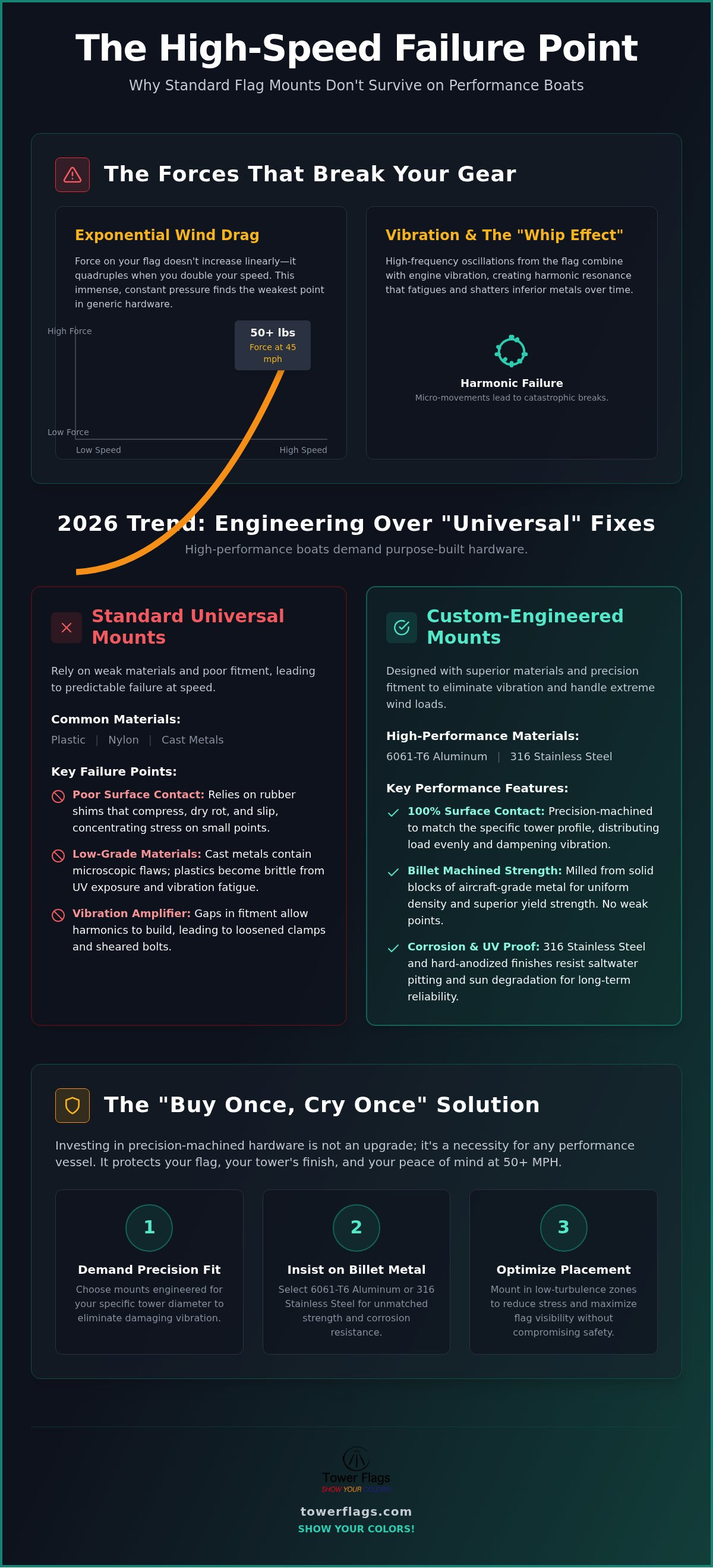
Most boat owners underestimate the sheer violence of wind resistance at cruising speeds. The Physics of Drag dictates that force doesn't just increase steadily as you accelerate; it grows exponentially. When you double your speed, the wind load on your flag and bracket quadruples. A standard 3x5 flag, which feels weightless at the dock, can exert over 50 lbs of constant force once you hit 45 mph. This relentless pressure tests every weld and bolt in your setup. Drag load is the primary cause of boat flag pole failure.
Without a dedicated high speed boat flag mount, this force finds the weakest point in your hardware. Generic mounts often rely on friction or thin set screws that simply cannot counteract the leverage of a tall pole under load. The result is typically a snapped bracket or a damaged tower.
Understanding Wind Load Calculations
The interaction between vessel speed and flag surface area creates a massive amount of stress on the mounting base. A flag acts as a sail. The taller the pole, the more leverage that "sail" has to pry the bracket off the tower. High-speed runs require specific tensile strength in the hardware to prevent the metal from yielding under pressure. This is why a high speed boat flag mount must be engineered with thicker walls and superior alloys compared to decorative, low-speed alternatives.
Vibration and Harmonic Failure
The "Whip Effect" is perhaps the most destructive force in a marine environment. As wind shears across the fabric, the flag oscillates rapidly, sending high-frequency vibrations down the pole. This creates a harmonic resonance that can turn a small amount of play in a bracket into a catastrophic failure. When engine vibration combines with this wind shear, generic clamps often loosen or snap due to metal fatigue.
Precision fitment is the only way to dampen these harmonics. When marine flag poles are perfectly matched to their brackets, the energy is distributed evenly across the mounting surface rather than concentrating on a single stress point. This prevents the micro-movements that eventually lead to the hardware shearing off entirely.
Evolution of Mounting Materials: 2026 Trend Analysis
The era of disposable boat hardware is ending. High-performance vessel owners in 2026 are increasingly rejecting mass-produced plastic and nylon components in favor of professional-grade metallurgy. This shift isn't just about aesthetics. It's a response to the reality that temporary fixes, like suction cups or strap-on mounts, fail when subjected to the violent energy transfer found in the physics of flag flutter. A dedicated high speed boat flag mount must now be built from aircraft-grade 6061-T6 aluminum or 316 stainless steel to survive the rigors of 50+ mph travel.
Why Material Choice Matters at Top Speed
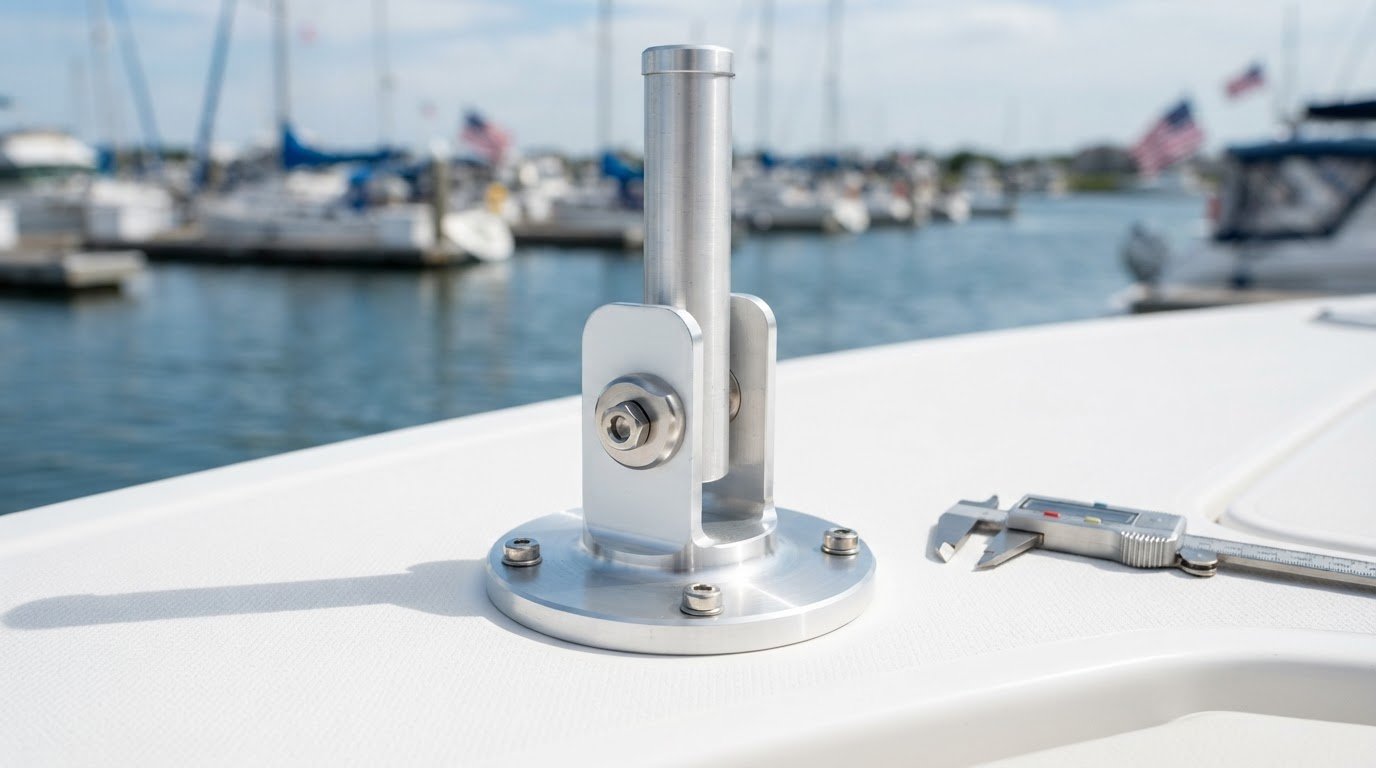
Material selection determines whether your hardware survives a season or a decade. Many "big box" marine stores sell cast components. These are made by pouring molten metal into a mold, which often leaves microscopic air pockets that act as stress concentrators. When the boat hits a wake at speed, these internal flaws can cause the bracket to snap without warning. Custom-machined hardware is different. It's milled from solid billet stock, ensuring uniform density and superior yield strength.
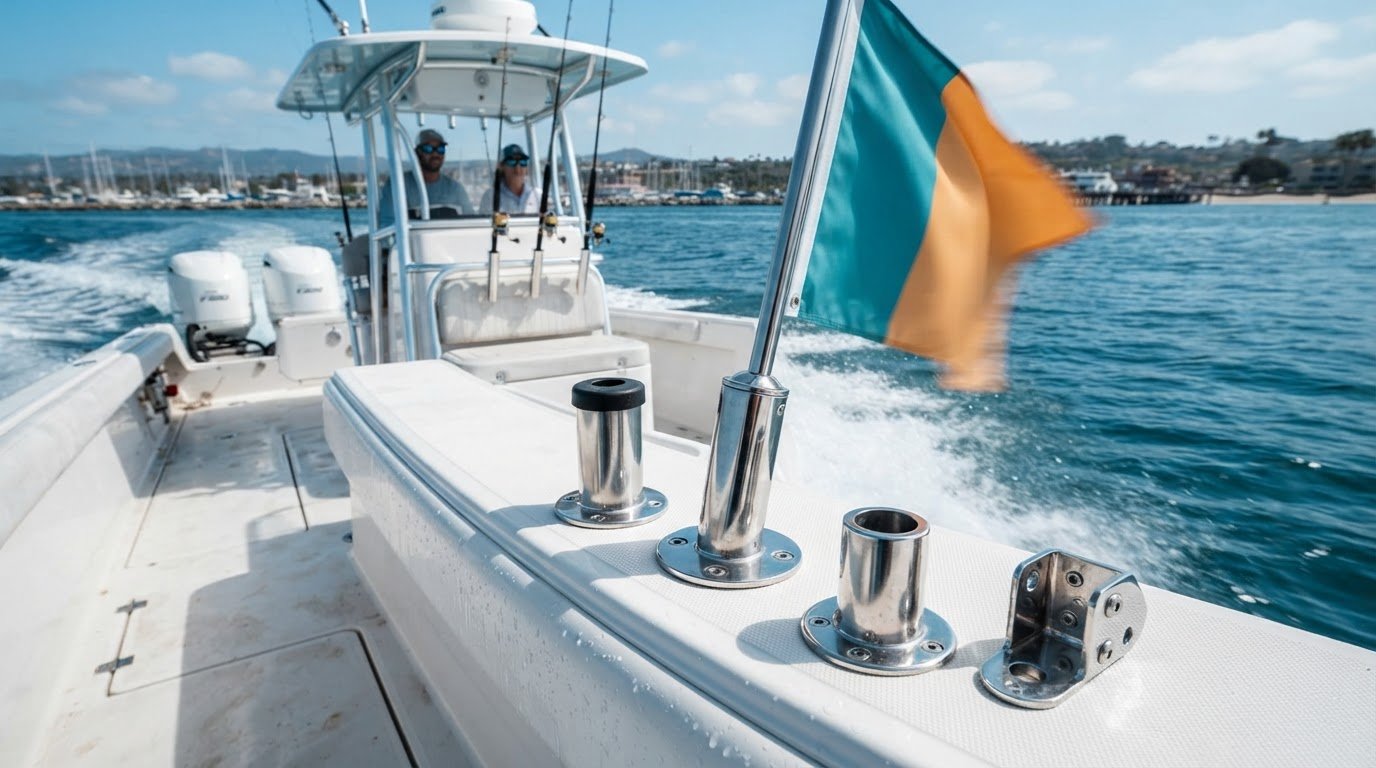
Corrosion resistance is another critical factor. The term "marine grade" is often used as a vague marketing label rather than a technical standard. In 2026, savvy boaters look for 316 stainless steel because it contains molybdenum, which provides superior resistance to pitting in saltwater environments. High-quality durable boat flag hardware also features hard-anodized finishes to combat the constant bombardment of UV rays that degrade cheaper coatings.
Engineering for Modern Boat Towers
As wakeboard towers like the Malibu G3 or MasterCraft ZFT series become more sculpted and aerodynamic, the "one-size-fits-all" clamp has become obsolete. These towers require a high speed boat flag mount that is specifically engineered for their unique diameter and taper. Universal mounts rely on thick rubber shims to fill gaps. These shims eventually compress, dry rot, or slip, leading to scratched towers and loose poles.
The move toward integrated, low-profile mounting solutions ensures a non-marring attachment that preserves the boat's finish. Custom-fit brackets provide 100% surface area contact, distributing the load evenly and eliminating the vibration that causes damage. This level of engineering has turned mounting hardware into a subtle status symbol within the performance community. It signals that the owner values precision and long-term reliability over convenience. For those seeking this level of craftsmanship, exploring the precision-machined brackets at Tower Flags is the logical next step.
Custom Fit vs. Universal Mounts: A Performance Comparison
Universal mounts are often marketed as a convenient shortcut for boat owners. In reality, they represent a "one-size-fits-none" compromise that relies on cheap rubber shims to bridge the gap between a generic clamp and your specific tower diameter. These shims eventually dry rot, compress, or slip under the intense drag of a high speed boat flag mount. When the shim fails, the metal-on-metal contact is no longer secure. This leads to vibration that can gouge your tower's powder coat or cause the hardware to shear off entirely during a run.
Efficiency in mounting comes down to surface area contact. A universal clamp typically touches only about 20% of the rail surface, concentrating all the force on a few stress points. In contrast, custom-machined hardware provides 100% grip. This total contact is vital for safety. At 50 mph, a flag pole that breaks free doesn't just fall; it becomes a dangerous projectile. Investing in custom boat flag brackets eliminates this risk by ensuring the hardware is an extension of the vessel rather than a bolted-on accessory.
The Mechanics of the Secure Grip
Custom fabrication allows for exact diameter matching down to the thousandth of an inch. This precision ensures that the bracket wraps perfectly around the tower rail without needing fillers or spacers. Precision-machined threads are equally important. Unlike mass-produced screws that can back out under constant engine harmonics, high-end hardware utilizes tighter tolerances. This engineering prevents the hardware from loosening, even during long runs in heavy chop or high-wind conditions.
Aesthetic and Resale Value
There is a clear aesthetic divide between generic and specialized hardware. Universal mounts often look like bulky afterthoughts that clutter the clean lines of a modern boat tower. Premium, custom-fit hardware integrates seamlessly with the vessel's design. This attention to detail protects your boat's resale value. High-end buyers recognize the difference between an owner who used "big box" shortcuts and one who invested in specialized equipment. Preserving the tower's finish by preventing scratches and gouges ensures the vessel remains in showroom condition for years.
Placement and Installation Strategies for Maximum Stability
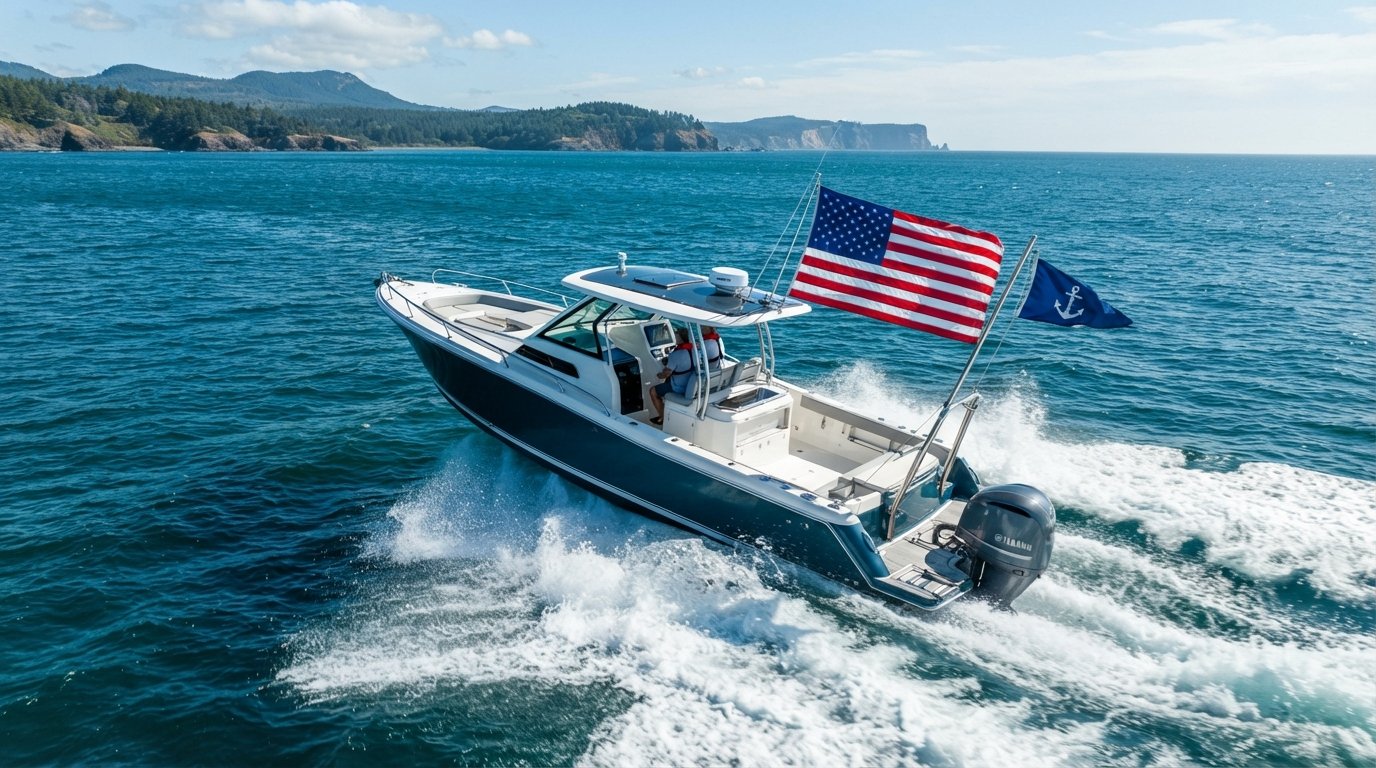
Finding the right location for your high speed boat flag mount is just as critical as the hardware's metallurgy. Even the strongest bracket faces unnecessary stress if it's positioned in a high-turbulence zone. Airflow over a performance boat is rarely smooth; it tumbles over the windshield and swirls around the cockpit. Placing your flag in a "Low-Turbulence Zone," typically higher on the tower or further aft on the stern rail, ensures the flag flies steadily rather than whipping erratically. This stability reduces the harmonic vibration that eventually leads to metal fatigue.
Angle of attack plays a significant role in drag reduction. Mounting a flag pole perfectly vertical creates maximum resistance. By introducing a slight rearward tilt, usually between 10 and 15 degrees, you allow wind to spill off the fabric more efficiently. This simple adjustment significantly lowers the blunt force load on the mounting base. It's a small engineering detail that separates a professional setup from a generic one. Before every run, you should verify the integrity of your best wakeboard tower flag mount for high speeds to ensure no components have shifted during transit or previous outings.
Optimizing for the Wakeboard Tower
The tower is the most popular mounting point because it offers 360-degree visibility. However, height brings challenges. You must balance visibility with bridge and dock clearance to avoid catastrophic impacts. Position the mount away from tow rope attachment points to prevent line tangle during watersports. While the top of the tower provides the cleanest air, it also experiences the highest wind velocity. Mounting slightly lower on the side supports can sometimes provide a more rigid attachment point while still maintaining clear sightlines.
Checklist for a Secure Installation
A secure installation starts with proper torque. Marine-grade mounting bolts should be tightened firmly but not to the point of stripping the threads or crushing the tower rail. Using a medium-strength (blue) thread locker is recommended for high-speed mounts. This prevents the hardware from backing out due to engine harmonics while still allowing for removal if needed. Perform a visual inspection before every launch. Look for hairline fractures or signs of "powdering" around the bracket, which indicates the mount has been moving under load. If you're ready to upgrade to hardware that stays put, explore the custom-engineered brackets available at Tower Flags.
Why Tower Flags is the 2026 Standard for High-Speed Mounting
Tower Flags exists because the marine industry's reliance on generic, mass-produced hardware failed to keep pace with modern boat performance. When you're pushing a vessel to its limits, you shouldn't have to worry about a mounting bracket snapping or a pole vibrating loose. We've built our reputation on a quality-first mindset that prioritizes mechanical integrity over retail convenience. By focusing on specialized high speed boat flag mount solutions, we provide the precision fitment that universal alternatives simply cannot achieve. This isn't just about holding a flag; it's about engineering a component that survives the violent harmonics of high-speed travel.
Our manufacturing process is a testament to American-made craftsmanship. Every component begins as high-grade billet stock before undergoing precision custom fabrication. We don't use cast metals or thin-walled tubing that yield under pressure. Instead, we machine our brackets to exact tolerances, ensuring that every thread and contact surface meets our rigorous standards. The final marine-grade finish isn't just for show. It's a protective barrier designed to withstand years of saltwater exposure and intense UV radiation. This meticulous approach solves the specific pains of high-speed enthusiasts who are tired of rust, vibration damage, and hardware failure.
Custom Fabrication for Every Captain
We understand that a high-end boat is a significant investment. Our hardware reflects that reality by offering a level of fit and finish that matches your vessel's aesthetic. We focus on specific tower models and rail diameters rather than trying to fit everything with a single, compromised clamp. This dedicated approach allows us to eliminate the need for rubber shims or spacers that eventually fail and mar your boat's finish. It's a "buy once" philosophy. We design our flag pole brackets to last for the life of your boat, providing a permanent solution to a common frustration. Our obsession with the fine details of fit ensures that the hardware feels like an original part of your vessel.
Ready to Secure Your Style?
Browsing our selection of custom flag brackets and poles is straightforward. We've categorized our offerings to help you find the exact match for your tower or stern rail setup. You don't have to guess which spacer you might need or worry about whether the hardware will hold at 50 mph. The ordering process is built for enthusiasts who value technical superiority and functional elegance. If you're tired of replacing broken mounts and chasing lost flags, it's time to invest in a professional-grade solution. Upgrade your high-speed setup with Tower Flags today and experience the difference that precision engineering makes on the water.
Secure Your Vessel with Precision Engineering
Performance boating in 2026 demands hardware that treats mechanical integrity as a priority rather than an afterthought. We've explored how exponential drag and harmonic vibration can turn a generic clamp into a liability at 50 mph. Protecting your vessel's finish and ensuring your flag stays vertical requires a shift from universal compromises to precision-machined solutions. By choosing a high speed boat flag mount designed for your specific tower or rail, you eliminate the "whip effect" and the risk of catastrophic hardware failure.
American-made craftsmanship ensures your equipment will withstand the rigors of high-speed runs for the life of your boat. Our specialized hardware offers 316 marine-grade stainless steel options and custom-machined components for an exact, non-marring fit. It's time to stop settling for mass-produced shortcuts and start enjoying the water with total confidence in your gear. Browse our custom-engineered high-speed boat flag mounts to find the professional-grade solution your boat deserves.
Frequently Asked Questions
What is the best flag mount for a boat going over 50 mph?
The best high speed boat flag mount for vessels exceeding 50 mph is a custom-engineered, precision-machined bracket designed for your specific boat model. Unlike generic clamps, these mounts provide 100% surface contact with your tower or rail. This eliminates the vibration and "whip effect" that causes inferior hardware to shear off. Investing in hardware crafted from aircraft-grade aluminum or 316 stainless steel ensures the assembly remains secure under extreme drag loads.
Will a universal flag mount damage my wakeboard tower?
Yes, universal flag mounts frequently cause damage to wakeboard towers. These products rely on rubber shims and spacers to accommodate different rail diameters. Over time, these shims compress, dry rot, or slip under the pressure of high-speed wind loads. This leads to metal-on-metal contact that gouges powder coatings and scratches the tower's finish. Custom-fit brackets eliminate this risk by providing a perfect, non-marring seal without the need for unreliable fillers.
Do I need a special flag pole for high speeds?
High-speed runs require specialized flag poles engineered with higher tensile strength than standard decorative versions. A standard pole may bend or snap when subjected to the 50+ lbs of force generated at cruising speeds. Specialized poles are designed to handle exponential drag loads and are precisely matched to their mounting brackets. This synergy prevents the harmonic resonance that leads to hardware fatigue, keeping your flag vertical and secure during performance maneuvers.
How do I prevent my boat flag from wrapping around the pole?
To prevent your flag from wrapping around the pole, use high-quality swivel attachments or anti-wrap clips that allow the flag to rotate independently of the pole. Proper placement also plays a role. Positioning your flag in a low-turbulence zone, away from the swirling air behind the windshield, ensures a steadier stream of wind. This consistent airflow keeps the fabric extended and reduces the erratic whipping that typically causes flags to tangle or foul on the hardware.
Can I mount a flag on my wakeboard tower without drilling?
You can mount a flag on your wakeboard tower without drilling by using custom-engineered clamp-on brackets. These precision-machined mounts are designed to match the exact diameter and taper of your specific tower brand. They provide a rock-solid grip through surface area contact and high-grade fasteners rather than permanent vessel modifications. This preserves the structural integrity and resale value of your boat while ensuring the hardware stays put even during high-speed travel.
What materials are best for salt water flag mounts?
The gold standard for saltwater environments is 316 marine-grade stainless steel. This alloy contains molybdenum, which provides essential resistance to pitting and crevice corrosion in harsh saline conditions. For those preferring lighter hardware, hard-anodized 6061-T6 aluminum is an excellent alternative. It offers a durable, non-corrosive finish that resists UV degradation. Avoiding cast metals and inferior "marine grade" labels ensures your mounting hardware won't rust or seize after a single season.
How often should I inspect my boat flag mounting hardware?
You should perform a visual inspection of your mounting hardware before every run. Check for loose bolts, signs of "powdering" around the bracket base, or hairline fractures in the metal. These are early indicators that the mount has been moving or vibrating under load. Regular maintenance, including re-torquing fasteners and checking for thread locker integrity, prevents small issues from turning into catastrophic failures that could result in lost gear or vessel damage.
Why do flags tear more easily at high boat speeds?
Flags tear more easily at high speeds because wind force increases exponentially as you accelerate. At 45 mph, the fabric is subjected to intense drag and high-frequency oscillation, often called the "whip effect." This rapid fluttering creates massive mechanical stress on the stitching and fibers, leading to fraying. Using a high speed boat flag mount with a slight rearward tilt can help spill some of this wind energy, reducing the immediate strain on the fabric.
Comments