

How to Choose a Flag for High Speed Boating
When choosing the best flag for high speed boating, consider flag hierarchy as well as fabric. The national ensign should be the largest flag on your vessel, with any private or custom flag displayed alongside it one size smaller. When and where you fly a flag also depends on its purpose, whether it identifies your country or serves as a courtesy flag.
Choose a flag that’s correctly sized, securely mounted, and suited to the conditions on the water. The right choice depends on how you use your boat, not on a one-size-fits-all rule.
Read on to learn how to choose a boat flag size, place a courtesy flag, and weigh nylon fabric for marine use. You’ll also find practical guidance on flag care, so you can make a considered choice before heading out at speed.
Table of Contents
Courtesy flag size and placement
Choose a courtesy flag’s size and placement together before mounting it. Use the national ensign as your reference for comparing sizes.
Choosing a Courtesy Flag SizeChoose a courtesy flag one size smaller than the national ensign flown with it. The same size relationship applies to a private or custom flag displayed alongside the ensign. Compare the flags before attaching them so the courtesy flag remains visibly subordinate. Its size depends on the ensign aboard your boat, so don’t choose it in isolation.
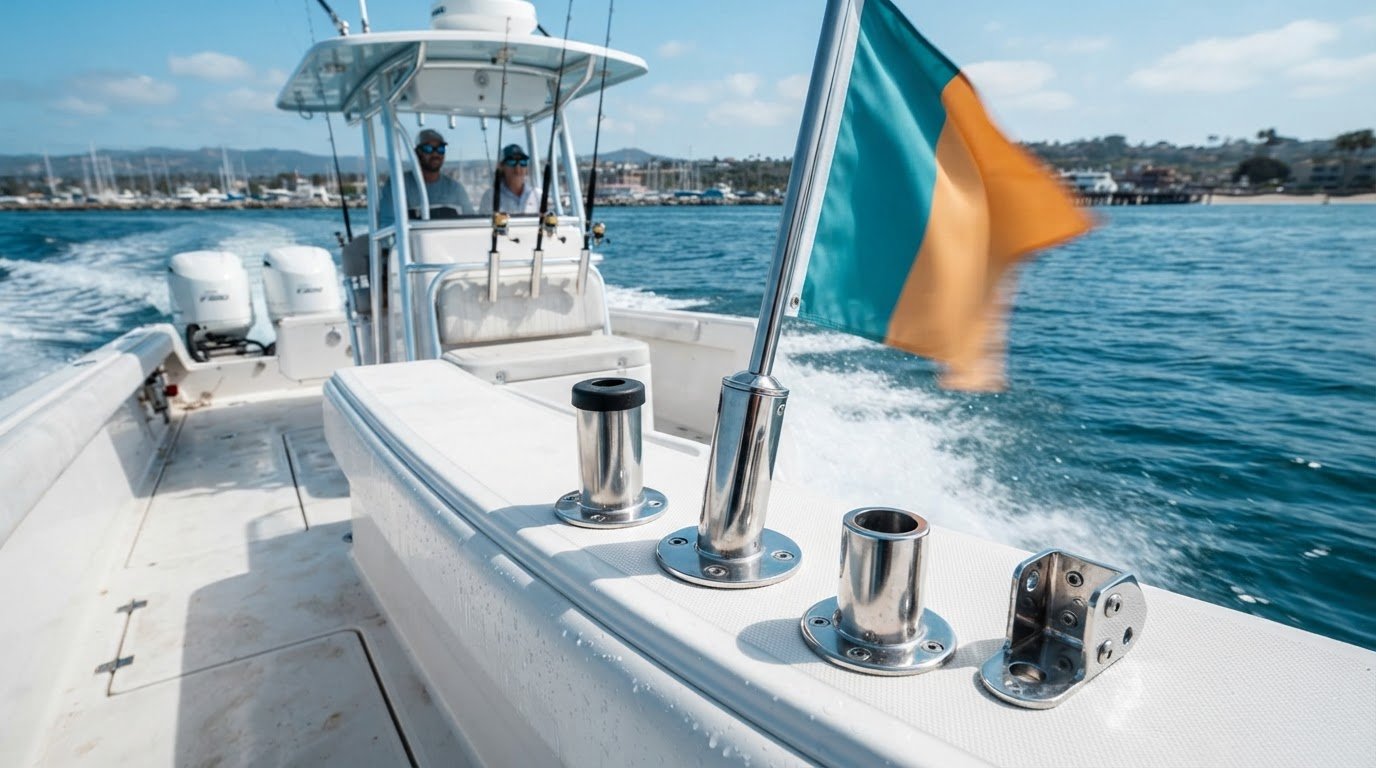
Mounting for Visibility at SpeedChoose among recognized mounting positions: a separate flagpole, the bow, or the starboard spreader. Consider how each location shows the flag against your boat’s profile. View the position from different angles before mounting it, and avoid spots where the flag blends into the boat or is difficult to see.
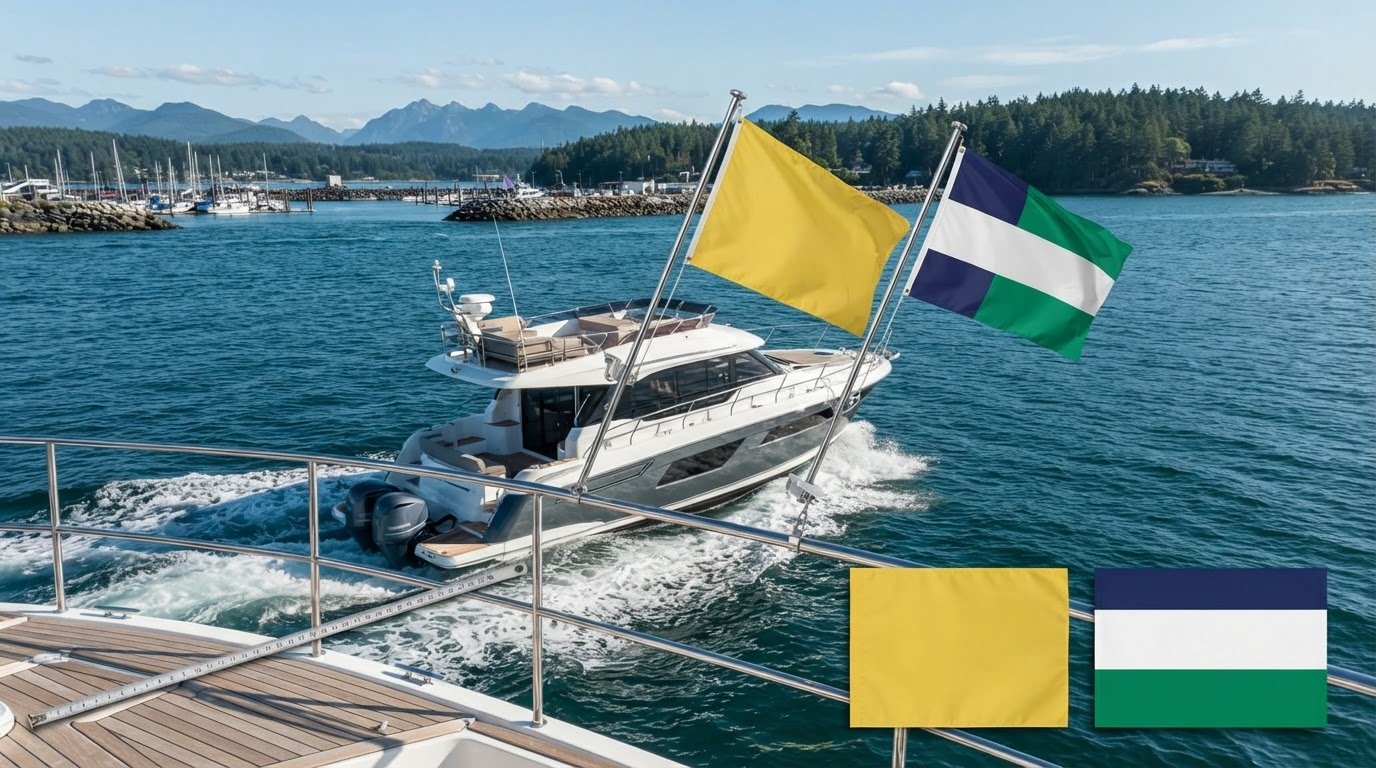
Compare the courtesy flag with the national ensign before mounting them. The ensign should be the largest flag aboard, and the courtesy flag one size smaller. Lay out both flags or hold them side by side to compare their proportions. This simple check helps keep the courtesy flag from competing visually with the ensign.
Assess each possible mounting point on your boat. A separate flagpole gives the courtesy flag its own position, while the bow and starboard spreader offer alternatives. Check visibility from the sides and ahead, then choose a spot where the flag is clear of the boat’s lines and easy to distinguish from its surroundings.
Review size and position together before heading out. A correctly sized courtesy flag can be hard to see if its mounting point hides it, while a prominent position won’t make an oversized flag appropriate beside the ensign. Check the two flags as a pair, then inspect the chosen spot from more than one angle.
Nylon fabric for marine conditions
Match the flag fabric to the wind and conditions you expect on the water. Lightweight nylon flies well in light wind, while two-ply open-weave polyester is suited to sustained wind and demanding weather.
Start with the wind conditions you usually encounter. Lightweight nylon flies well in light wind, making it a practical option for calmer conditions. Consider the trips you actually take rather than choosing fabric based only on your boat’s top speed. Identify the conditions the flag will face before comparing materials.
For sustained wind and demanding weather, consider two-ply open-weave polyester. Its construction is designed for these conditions, making it a useful alternative to lightweight nylon. Compare each fabric’s intended use with your typical boating conditions: a flag for light wind faces a different job from one exposed to sustained wind.
Distinguish boat speed from the wind conditions you encounter. A fast boat can travel in light wind, while a slower outing can bring demanding weather. Let the conditions, not speed alone, guide your fabric choice. If your outings involve changing weather, prioritize a material suited to the more demanding conditions you regularly face.
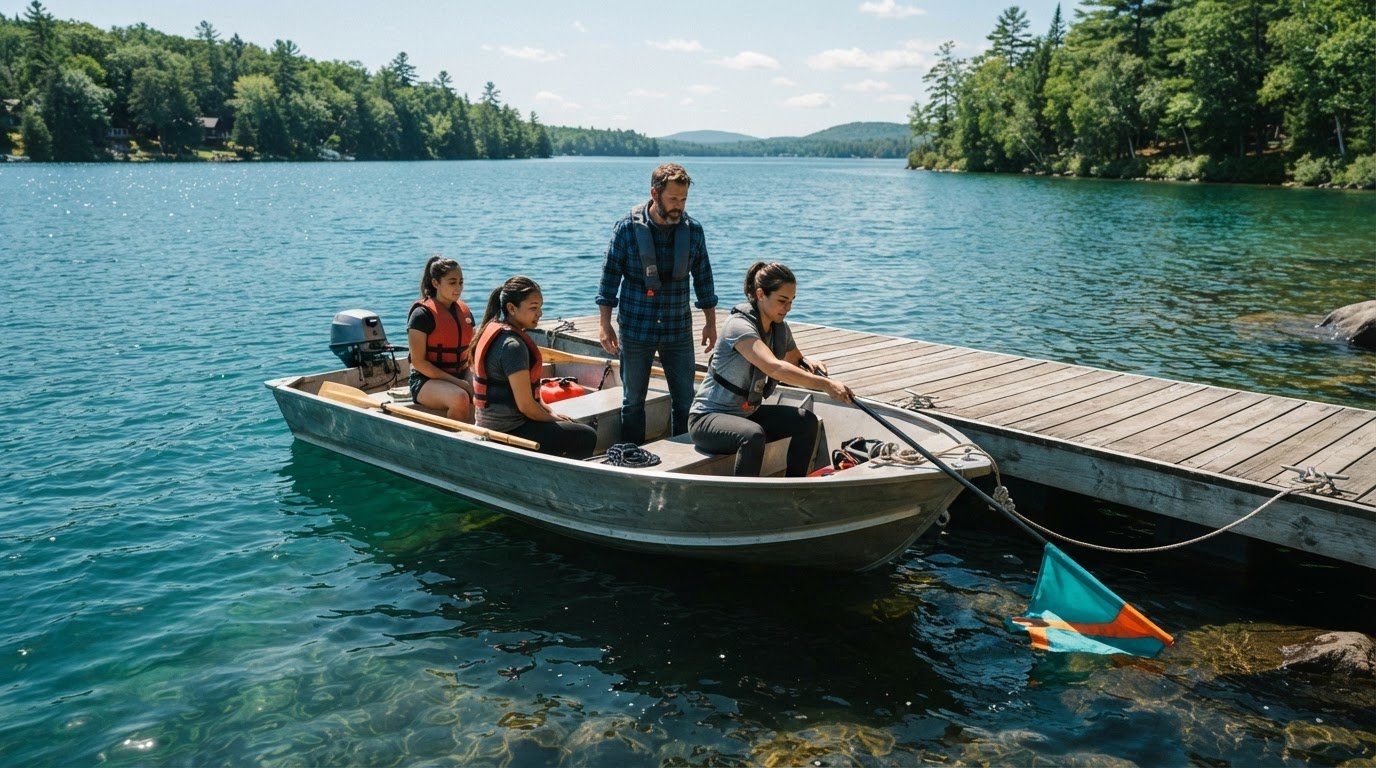
Plan for saltwater care when choosing a flag. After using it in salt water, rinse it with fresh water, then let it air-dry completely before storing it. This straightforward routine applies to lightweight nylon and other fabrics. Don’t pack the flag away damp; let it dry fully first.
Store the flag carefully between outings. Once it’s completely dry, roll it loosely and put it in a clean, dry place. Avoid tightly folding or compressing it. Before your next trip, unfold the flag and inspect its fabric and edges for visible wear. This check can help you spot damage before heading out.
Follow a simple sequence: identify the typical wind, compare fabrics with their intended conditions, then plan for care. Lightweight nylon suits light wind; two-ply open-weave polyester is designed for sustained wind and demanding weather. After saltwater use, rinse the flag with fresh water, air-dry it fully, and store it loosely rolled in a clean, dry place.
Where should a boat flag be mounted for maximum visibility at speed?
Choose a mounting point by checking the flag’s sightline against your boat. Compare a separate flagpole, the bow, and the starboard spreader before settling on a position.
Start with a separate flagpole as one placement option. With the boat stationary, view it from ahead, astern, and both sides. Check whether the flag stands apart from the boat’s outline or disappears against other equipment. Looking from several angles helps you assess the pole’s location more reliably than viewing it from one spot.
Assess the bow as another possible mounting position. Look from ahead and each side, and compare how much of the flag remains visible. Consider the boat’s profile and nearby structures that may obstruct the view. The bow may work well when another position would make the flag look crowded.
Inspect the starboard spreader from several angles. Check whether the flag stands out against its background from ahead, astern, and alongside. Compare the view with a separate flagpole and the bow. Choose the position that makes the flag easiest to distinguish from these viewpoints.
Compare candidate positions consistently rather than choosing by appearance from one spot. From the dock, view each position from the same locations around the boat and look for obstructions from the boat’s structure. A flag that looks prominent from the dock may blend into the boat’s profile when viewed from ahead or astern.
With the boat stationary, review the intended position from the helm. Check that the flag is visible without blocking your sightline, then view it from ahead and the sides. These perspectives help you balance visibility with your vessel’s layout before choosing a mounting point.
Consider how the boat’s outline affects the flag’s contrast. A flag against an open background may be easier to distinguish than one directly behind the boat’s structure. Compare the same flag at the bow, on a separate flagpole, and at the starboard spreader. Base your choice on what you can actually see.
Make your final choice after checking all candidate positions from several angles. Confirm that the flag is visible from ahead, astern, and alongside without obstructing the helm’s view. Inspecting the boat while stationary lets you compare options methodically before heading out.
Once the sightline is clear from the viewpoints around the boat, consider whether the flag’s size is easy to distinguish against the vessel’s outline. The Allegiance Boat Flag Set has a 16" x 24" American flag. You can use that size as a reference when comparing candidate mounting positions, checking that the flag remains visible without crowding the boat’s profile or interrupting the helm’s view. Repeat the visual comparison from ahead, astern, alongside, and at the helm before settling on a position.
A similar American boat flag shown on the page has 2 brass grommets. Check that the mounting arrangement works with the flag’s attachment points and keeps it oriented for the sightlines you assessed. If considering another flag, compare its dimensions and attachment points with the location you chose, then make the same stationary visibility checks before heading out.
Choosing a boat flag size based on vessel length
Start with your boat’s length, then compare the suggested flag and staff dimensions. These pairings provide practical reference points for choosing a flag that suits your vessel.
Identify your boat’s length before comparing flag dimensions. The suggested sizes pair vessel length with both flag size and staff length. Consider the measurements together, since choosing a flag alone leaves out the staff needed to display it. Use the corresponding length as a starting reference, then assess how the dimensions fit your vessel.
For a 20-foot boat, consider a 12 x 18-inch flag with a 24-inch staff. These measurements provide a clear starting combination for this vessel length. Compare the flag dimensions and staff length with the intended mounting position. Keeping both measurements in view helps you assess the full setup, rather than treating the flag as a separate choice.
For a 25-foot boat, the suggested combination is a 16 x 24-inch flag and a 32-inch staff. Move to this pairing when the vessel length matches that reference. Compare it with the 20-foot recommendation, which uses a smaller flag and staff. The vessel-length chart offers a straightforward way to select a proportionate starting size.
For a 30-foot boat, use 20 x 30 inches as the suggested flag size. Pair it with a 40-inch staff. Check both dimensions before selecting your setup. The larger flag and staff distinguish this recommendation from the 25-foot pairing. Keep the vessel length as your guide when comparing these options.
For a 35-foot boat, consider a 24 x 36-inch flag and a 48-inch staff. Use these two measurements together when planning the display. Compared with the 30-foot recommendation, the flag dimensions and staff length both increase. This gives you a clear next reference point for a longer vessel.
For a 40-foot boat, the suggested flag size is 24 x 36 inches or 30 x 40 inches. The corresponding staff length is 48 or 60 inches. Choose between these pairings by considering how the flag will fit the vessel’s layout. Keep the flag and staff measurements matched, rather than combining sizes from different options.
Use the listed pairing for the closest matching vessel length, then assess the physical fit. A 25-foot boat, for example, points to a 16 x 24-inch flag and 32-inch staff. A 40-foot boat has two suggested pairings to compare. Match your flag and staff as a set before moving to mounting decisions.
Flag flown
Identify each flag’s purpose before deciding what to fly. A national ensign, courtesy flag, burgee, and signal flag each serve a different role aboard a boat.
Start by identifying the boat’s country of registration. Its national flag is the ensign to compare with other flags aboard. This establishes which flag takes the largest place in the display. Choose the ensign based on the registration country, not simply its colors or design.
An ensign is the national flag flown at a boat’s stern. Use its position and purpose to distinguish it from a courtesy flag or club pennant. For example, a national flag at the stern serves a different role from a club burgee.
Keep the national ensign as the largest flag on the vessel. Compare its dimensions with each private or custom flag before displaying them together. This creates a clear visual hierarchy. Any courtesy or custom flag accompanying the ensign should visibly be smaller.
In international waters, U.S. boaters should hoist the traditional 50-star U.S. flag. Use the traditional 50-star design for that setting. This detail helps distinguish the national ensign from other American-themed flags aboard. Consider the waters where you’ll be boating when selecting which national flag to display.
Distinguish a courtesy flag from a national ensign when planning your display. They aren’t interchangeable: the ensign identifies the boat’s country of registration, while a courtesy flag has a separate role. Be clear about each flag’s purpose before deciding which to bring aboard.
A burgee is a club pennant, often triangular or swallow-tailed. Treat it as a club identifier, not a national ensign. Its distinctive shape can help distinguish it from a rectangular national or courtesy flag.
Use signal flags for communication at sea. Unlike an ensign or club burgee, signal flags send messages. Identify them by their communication role when arranging other flags, so they aren’t mistaken for a national or courtesy display.
Before setting out, review each flag by purpose: national ensign, courtesy flag, club burgee, or signal flag. Check that the country’s ensign remains the largest. For a U.S. boat in international waters, choose the traditional 50-star U.S. flag. This final review keeps the display purposeful and distinct.
Tower Flags: Flag Pole Brackets
Tower Flags makes Flag Pole Brackets and Flag Poles for boat owners. Once you’ve chosen where to display your flag, consider the bracket and pole as part of the setup. Tower Flags designs and fabricates custom-fit brackets and poles to your tower’s specifications, giving you a mounting solution tailored to your vessel.
Tower Flags designs and manufactures custom brackets and poles for marine environments. Explore its Flag Pole Brackets, Flag Poles, and Flags to find options that fit your display plans. If you’re ready to take the next step, visit Tower Flags.
Make Your Boat’s Flag Setup Your Next Upgrade
Choosing the best flag for high speed boating is one part of preparing your boat for time on the water. Consider the flag, pole, and mounting point as a connected setup, and think about how you use your boat before choosing hardware. A clear plan helps you focus on what suits your vessel rather than buying without a defined purpose.
Tower Flags offers Flag Pole Brackets and Flag Poles for boat displays, along with Flags. A Gift Card is another option for a boating enthusiast who would prefer to choose their own flag setup. For help exploring the options, ask Tower Flags about boat flags. Your next outing is a good reason to refine the details and make the setup your own.
Frequently Asked Questions
What flag is best for high-speed boating in the United States?
For a U.S. boat in international waters, fly the traditional 50-star U.S. flag as its national ensign. Choose any additional flag according to its purpose, such as a courtesy display or club pennant, and keep the ensign’s place in the display clear. The best flag for high speed boating is the one that suits the intended use, wind exposure, and boat setup.
What flag materials and mounts hold up best in high winds and saltwater?
For sustained wind and demanding weather, choose two-ply open-weave polyester; lightweight nylon suits light wind. After saltwater use, rinse flags with fresh water, air-dry them fully, and store them loosely rolled in a clean, dry place. For a tailored mounting setup, Tower Flags makes custom brackets from a high-strength carbon fiber composite, with threaded poles that screw directly into the brackets.
Comments