

How to Install a Boat Flag Pole Mount on Your Boat
A secure boat flag starts with the right mounting location. To learn how to install a boat flag pole mount, choose a transom, stern rail, or suitable flat surface that supports the mount and keeps the flag clear of nearby equipment. Fasten the mount with marine-grade screws or clamps, insert the pole, tighten the set screw, and attach the flag with stainless-steel snap hooks.
It’s easy to focus on the flag and overlook how the mount fits the boat. A stable, well-positioned installation helps keep the pole in place and the flag clear of obstacles. This guide covers how to choose a location, compare mounting styles, and secure the pole. You’ll also learn what to consider when matching a mount and pole to your boat and flag.
Table of Contents
Choosing a mounting location
Start by locating a solid mounting point with room for the flag to fly freely. Then check flag etiquette, cover clearance, and nearby equipment before choosing the final position.
Evaluate Potential Mounting LocationsInspect the transom and stern rail first, as both are common flagpole locations. Stand back and check whether the flag will clear the motor, tow bar, seating, and other equipment. When a boat has no gaff, a national ensign is generally flown from a stern flagstaff. If there is an overhanging boom or outboard motor, the stern flagstaff may preferably sit to starboard. These are etiquette considerations, not universal boating laws.
Check the boat cover’s path before choosing rail hardware. Fabric rubbing against a rail-mounted holder can wear through a cover, so consider how the cover will fit around the installed mount. A tow bar may also work as a mounting location: for example, one owner used two clamp-on fishing rod holders for flags or fishing gear. Treat this as an example and assess clearance around your own equipment.
Assess Safety RisksCheck the chosen area for interference with movement, visibility, or onboard equipment. Keep the pole and flag clear of walkways, controls, and anything that could snag fabric or rope. Make sure the mounting surface can support the hardware without obstructing the cover. During installation, control the pole and keep your hands clear of places where a shifting pole or tool could pinch them. Reassess the setup if the flag catches or blocks access.
The mount type, required hardware, and installation method all affect the overall cost. A transom, rail, or surface mount may require different materials, and installing it yourself differs from paying for installation. Compare the requirements of the location you choose rather than relying on a single typical figure.
Mounting options for transoms, rails, and surfaces
Choose a mount that suits the boat’s structure and the pole’s position. Then prepare the mounting area so the hardware sits securely and aligns correctly.
Match the Mount to the Boat and FlagMeasure the available space and consider how high the pole will sit. Match the mount’s attachment style to the surface, rather than forcing a rail clamp onto a flat panel or a surface mount onto a rail. Also account for the flag’s size and the pole’s length. One example used a 46-inch pole with a mount attached to a ski pylon, showing how vessel layout can shape the setup.
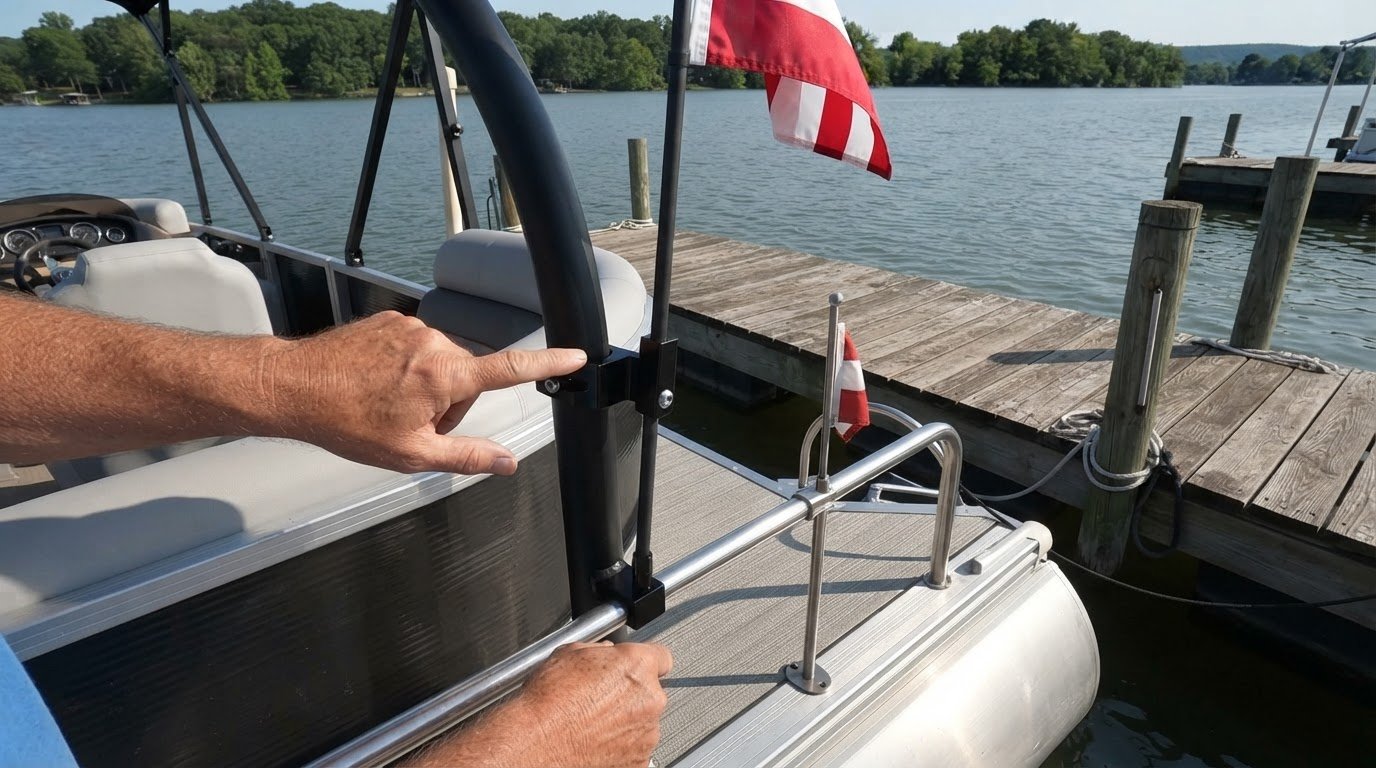
Compare Transom, Rail, and Surface MountsUse a transom mount when the stern offers a suitable flat attachment area. A rail mount clamps to a compatible rail, while a surface mount fastens directly to a flat section. Stern rails and transoms are common mounting locations. Before choosing, check that the pole can stand clear of boat equipment and that the fasteners can hold the mount firmly. Marine-grade screws or clamps are suitable fastening options.
Protect Fiberglass During InstallationMark the mounting holes, then check the reverse side for access and obstructions before drilling. To reduce the chance of cracking fiberglass, support the work area, use a sharp bit, and apply steady, controlled pressure. Don’t force the bit or overtighten fasteners, as either can stress the surface. If the panel flexes or the area lacks support, choose a better-supported location.For a firmer attachment, use a backing plate where the installation allows, so the load is distributed across more of the panel. Keep the mount aligned as you tighten each fastener, then inspect the surface for movement or damage. Complete the display with boat flags suited to the pole and mounting position.
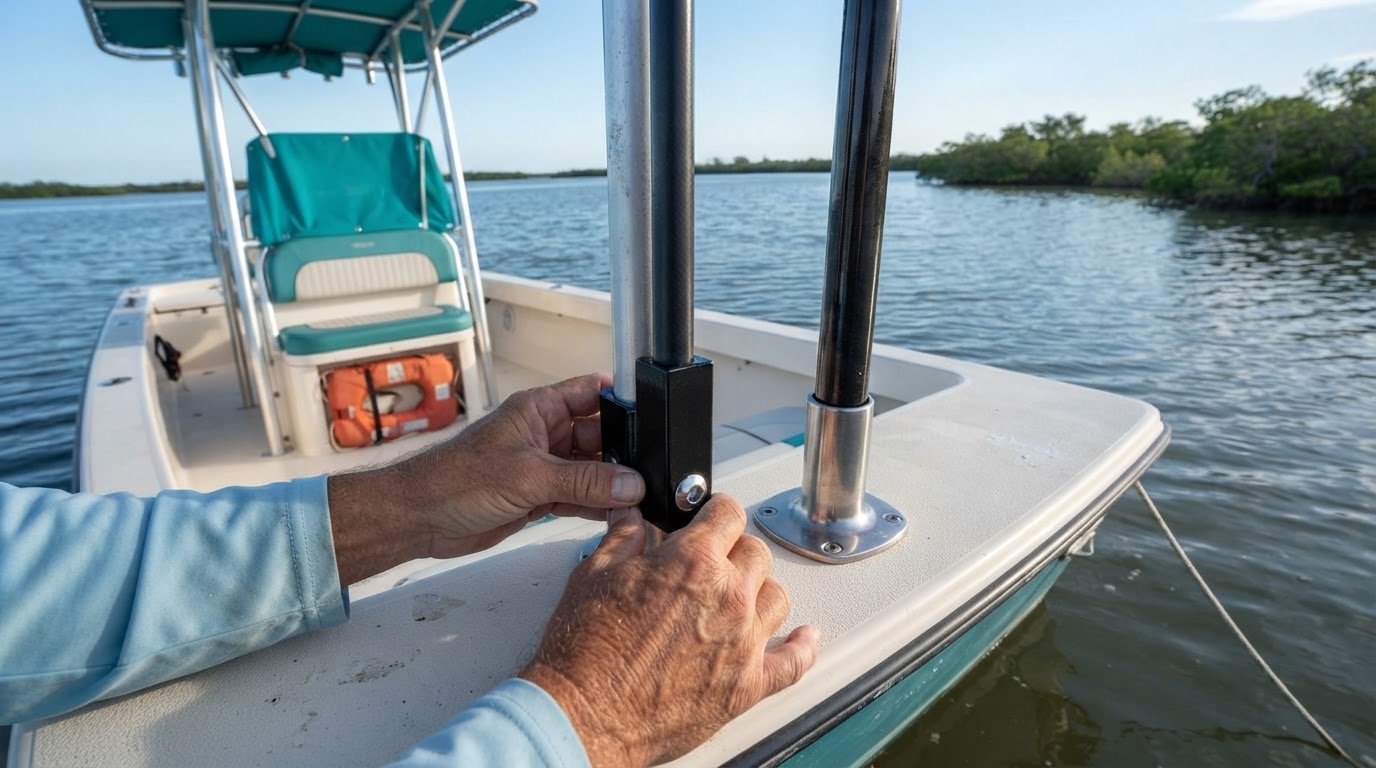
Securing a flagpole with a set screw
Prepare the mount and fasteners before fitting the pole. A stable base and properly tightened set screw help keep the pole seated. Following a clear installation sequence makes each connection easier to inspect as you work.
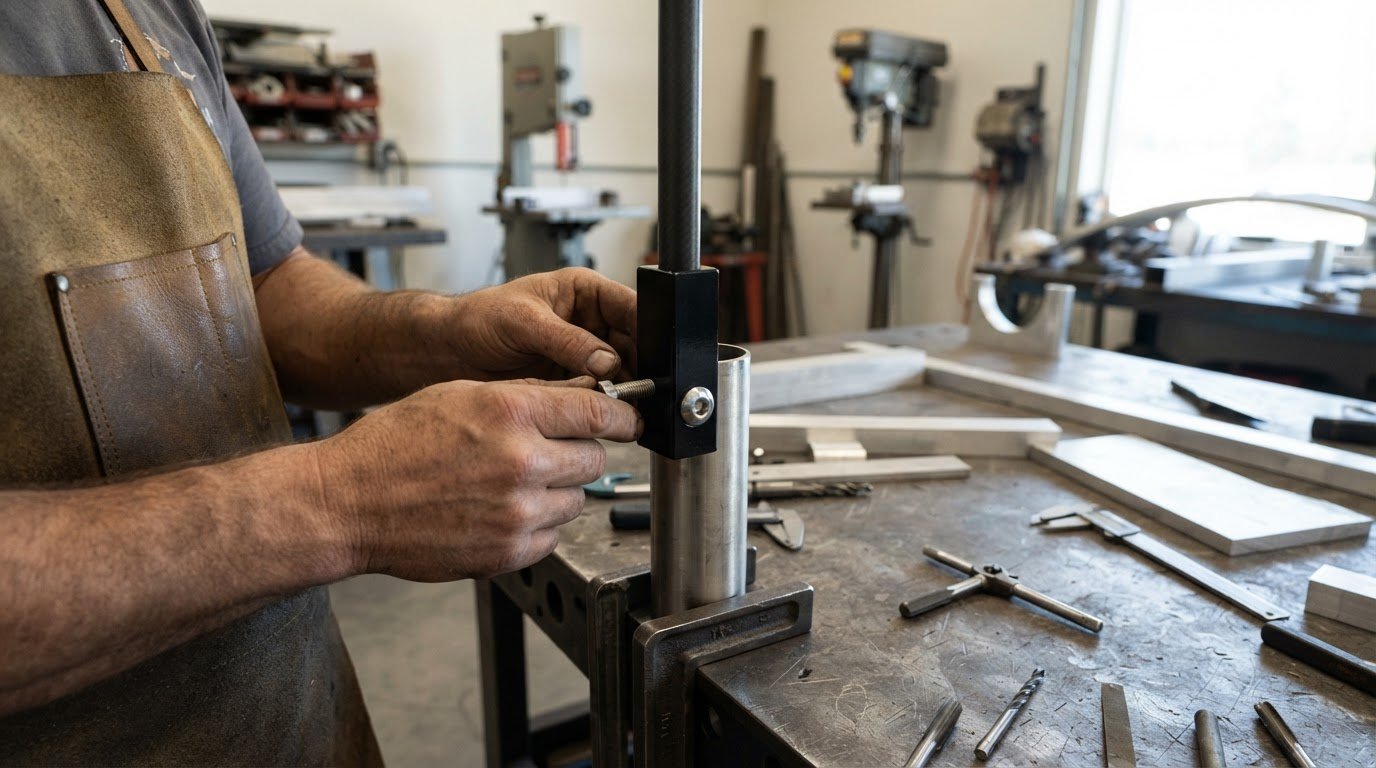
Gather Tools and HardwareGather a drill, a bit suited to the mounting surface, and a driver or wrench that fits the fasteners. Set out the mount, marine-grade screws or clamps, set screw, pole, and stainless-steel snap hooks. The tools you need depend on the mount and fastener design. Avoid tools that slip or damage screw heads.Compare each fastener with its mounting point before starting. Make sure the set screw turns freely and reaches the pole when it is seated in the mount. Support the pole while handling the hardware so it cannot fall or strike the boat. Follow the mount’s instructions for any supplied parts.
Choose Sealant and FastenersChoose marine-grade screws or clamps suited to both the mount and attachment surface. Screws secure surface mounts, while clamps hold compatible rails. If the installation calls for sealant, use one intended for marine applications and compatible with the boat’s surface and mount materials. Apply it according to the manufacturer’s directions.Don’t guess at fastener size or sealant compatibility. A fastener must engage securely without damaging the mounting area, and overtightening can stress the surface. Keep sealant away from moving parts, including the set screw threads, unless the product instructions say otherwise. Wipe away excess before it cures.
Insert and Secure the PoleSeat the mount firmly, then slide the flagpole into its socket. Align the pole before tightening the set screw. Turn the screw until it holds the pole securely, without forcing it or damaging the pole. Attach the boat flag with stainless-steel snap hooks, connecting each hook to its intended attachment point.After installing the mount, hold the pole and check for movement at the socket. If it shifts, loosen the set screw, reseat the pole, and tighten the screw again. Check that the flag clears nearby fittings and the hooks stay attached. Recheck the set screw after handling the pole or removing the flag.
How do I choose a flag pole mount compatible with my boat and flag size?
Measure the available mounting area and note its shape before choosing hardware. A flat transom, round rail, and other surfaces each require a mount designed for that attachment. Then compare the mount opening with the pole diameter. A close fit lets the set screw secure the pole; a mismatch can leave it loose or prevent it from fitting.
Match the flag and pole to the scale of the boat. For smaller boats, a 12-inch pole with a 12-by-18-inch flag is a recommended combination. Treat that as a starting point, then consider the space around the mount and the flag’s clearance. A flag that crowds nearby fittings may interfere with equipment or movement.
Choose materials with the boat’s use in mind. Stainless-steel boat flagpoles are recommended for saltwater use. Match the pole to the mount’s construction and attachment method, and use compatible hardware. Even a correctly sized pole needs a mount that fits the boat’s rail or surface, so consider both parts together.
Before buying, compare the mount’s attachment style, pole opening, and the flag’s dimensions. Check that the selected pole can sit securely in the mount and that the flag has room to fly without hitting nearby structures. If you’re ready to choose compatible boat flag pole options, use your measurements and intended mounting position to narrow the fit.
Tower Flags: Flag Pole Brackets
Tower Flags offers Flag Pole Brackets for boat owners choosing hardware to suit their mounting location and pole. Pairing a bracket with a compatible Flag Pole helps bring the installation plan together, while selecting a Flag completes the display. Turn to these options when you’ve identified where the mount will sit and need hardware to match your setup. The right choice depends on the boat’s attachment point, the pole fit, and the flag you intend to fly. Contact Tower Flags to discuss your boat flag setup.
Make Your Flag Setup Part of the Plan
Plan for more than installation day. A well-considered flag setup should suit how you use and store the boat, as well as any occasions when you change flags. Before settling on a configuration, consider how easily you can remove the pole or change the flag, and whether the hardware works with your regular boat cover. These details make the setup easier to use over time.
When deciding how to install a boat flag pole mount on your boat, match the mounting location and pole requirements to the hardware. Tower Flags makes custom Flag Pole Brackets and Flag Poles for boat towers, and offers Gift Cards for boat flag setups and gifting.
Contact Tower Flags for help with your next step. A considered setup lets you finish the installation with a clear plan and enjoy flying your flag.
Frequently Asked Questions
What types of boat flag pole mounts are available and how do they differ?
Boat flag pole mounts commonly attach to a transom, rail, or flat surface. A transom mount fastens to the stern, a rail mount clamps around a compatible rail, and a surface mount attaches to a flat panel. Choose based on the boat’s structure and the pole’s position. A rail clamp, for example, can avoid drilling holes, but it must fit the rail securely.
Where should a flag pole mount be installed on a boat?
Choose a stern location where the flag has room to fly without blocking equipment or access. The transom and stern rail are common options, but the best position depends on the boat’s layout. Consider how a cover fits over the area and whether the flag could catch on nearby fittings. If flying a national ensign, account for stern placement and surrounding obstructions.
How do I install a screw-on boat flag pole mount step by step?
Position the mount on a suitable flat area and align it before marking the fastener holes. Prepare the surface carefully, then secure the bracket with marine-grade screws suited to the mount and boat. Follow the mount’s instructions for sealant. Insert the pole and tighten its set screw. Attach the flag, then check that the assembly is firm and clears nearby hardware.
How do I mount a flag pole holder on a boat without drilling?
Use a clamp-style holder on a compatible rail or other suitable structure. Position the clamp so the pole clears boat equipment, then tighten it according to its instructions. A clamp-on arrangement can avoid drilling, but it depends on a secure fit with the existing rail. Check the holder and pole for movement after installation, and make sure the flag won’t rub against the boat cover.
How much does a boat flag pole mount and installation typically cost?
Costs vary with the mount type, required hardware, and whether you install it yourself or pay for installation.
Comments