

Purpose-Built Flag Pole Benefits for Homes, Businesses, and Boats
A flag pole can look right and still be the wrong fit for its setting. The benefits of a purpose-built flag pole come from matching its design and mounting method to where and how it will be used, whether at home, at a business, or on a boat.
Flag hardware should suit its surroundings, rather than overlook the practical differences between a yard, a commercial property, and a vessel. A well-matched setup can create a tidy display and make everyday use more straightforward.
This article explains what purpose-built flag poles can offer and how construction, exposure, visibility, and mounting needs affect the choice. You’ll find what matters most for homes, businesses, and boats, plus practical points to consider when choosing a pole and bracket.
Table of Contents
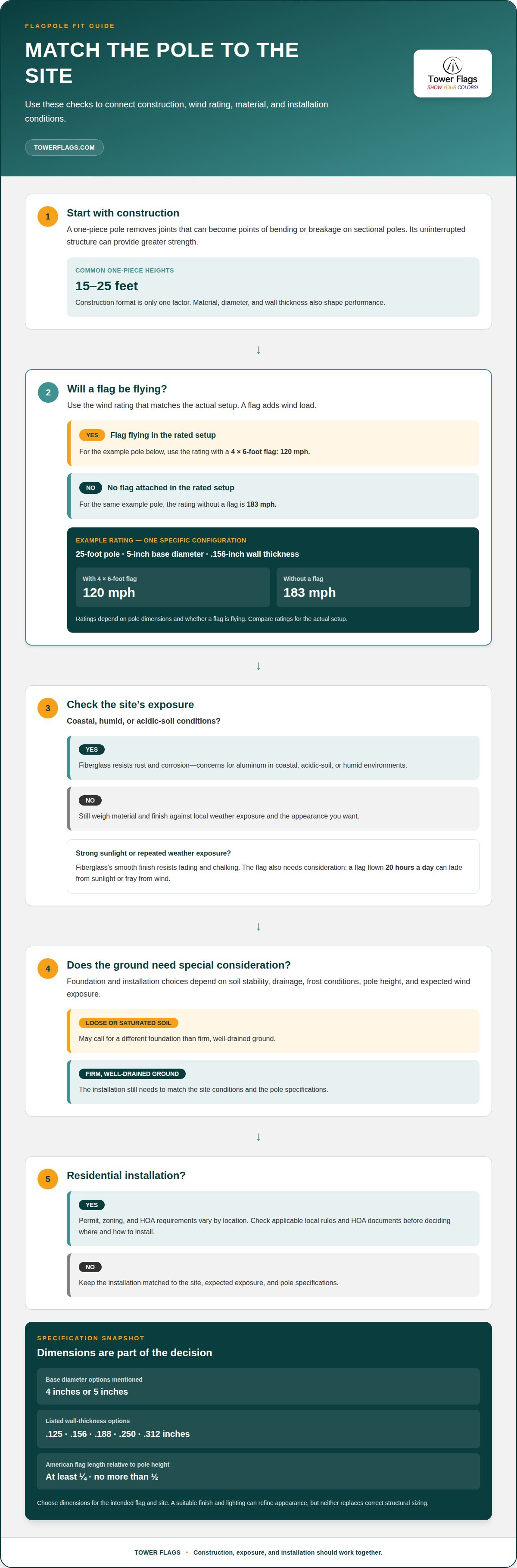
Durability and strength compared with multi-piece flagpoles
A one-piece flagpole removes joints that can become points of bending or breakage on sectional poles. Its uninterrupted structure can provide greater strength, while material, diameter, and wall thickness also shape performance. Common one-piece heights range from 15 to 25 feet, making construction format one consideration alongside the site and intended flag.
Wind ratings depend on the pole’s dimensions and whether a flag is flying. For example, a 25-foot pole with a 5-inch base diameter and .156-inch wall thickness is rated for 120 mph with a 4-by-6-foot flag, and 183 mph without one. A 25-foot flagpole may have a 4-inch or 5-inch base diameter. Listed wall-thickness options are .125, .156, .188, .250, and .312 inches. Compare ratings for the actual flying setup, since a flag adds wind load.
Foundation and installation choices depend on soil stability, drainage, frost conditions, pole height, and expected wind exposure. Loose or saturated soil may call for a different foundation than firm, well-drained ground. The installation should suit both the site and the pole specifications.
Permit, zoning, and HOA requirements vary by location. Check the applicable local rules and HOA documents before deciding where and how to install a residential flagpole.
Flags can also represent unity and strength. Military bases may fly flags representing multiple branches from one pole to signify unity. For an American flag, its length should be at least one-quarter and no more than one-half of the flagpole’s height. That proportion helps the flag read clearly against the landscape without overwhelming the display. A suitable finish and lighting can further refine its appearance, but neither replaces correct structural sizing. The benefits of a purpose-built flag pole start with matching its construction and dimensions to its setting and use.
Resistance to wind, rust, corrosion, fading, and chalking
Exposure affects both a flag’s condition and the pole that supports it. Material, finish, flag size, and local weather all influence performance.
Resistance to Weathering and Surface Damage
Weathering resistance describes how well a flagpole withstands environmental exposure while retaining its structural and visual quality. Fiberglass resists rust and corrosion, concerns for aluminum in coastal, acidic-soil, or humid environments. Its smooth finish also resists fading and chalking, helping the pole maintain its appearance. These qualities can matter in exposed settings, where salt, moisture, and sunlight repeatedly affect materials and finishes.
Material choice should reflect the installation environment, not appearance alone. For coastal exposure, corrosion resistance is a practical consideration; in strong sun, finish durability matters to the visual presentation. A flag flown 20 hours a day can fade from sunlight or fray from wind, so the fabric also faces ongoing weather stress. A custom display still needs a flag size suited to its pole and exposure.
High-Wind Safety and Maintenance
High-wind safety means accounting for the extra force a flag puts on its pole and taking the flag down when conditions warrant. Wind ratings may list separate maximum speeds with and without a flag attached; use the rating that matches the actual setup. Flag size affects wind load, so compatibility matters as much as the pole’s material and dimensions.
Taking the flag down on very windy days can extend its life and reduce strain on the pole. After severe weather, inspect the flag and visible pole components for fraying, looseness, or surface damage before flying again. Warranty coverage is a separate consideration: review the written terms and exclusions for the specific product, and follow its maintenance guidance. This keeps care decisions grounded in the actual coverage rather than assumptions.
The benefits of a purpose-built flag pole include choosing materials and flag dimensions to suit real weather exposure. For a display shaped around its conditions, explore flagpole options for outdoor use.
Business visibility and curb appeal
A flagpole can make a business more noticeable and shape its outdoor presentation. Placement, visibility, and upkeep all influence how the display fits the property.
Seamless Appearance
A seamless flagpole has a continuous profile without visible joints interrupting its surface. That clean outline can suit an office entrance, storefront, or landscaped approach, where small details contribute to the overall impression. One-piece poles also avoid joint lines where dust and dirt can collect. For a business seeking a refined display, the difference is practical as well as aesthetic: fewer visible breaks create a more unified feature against the building and landscape.
Outdoor Aesthetics
Outdoor aesthetics describe how a flagpole, flag, and property work together visually. A pole beside an entrance can frame the arrival area, while one near a driveway can be visible from the approach. Its scale and finish should complement nearby architecture and landscape features. An aluminum pole, for example, has a distinct material appearance; its placement and the flag’s colors affect how it looks beside the building.
Plan the display around sightlines from roads, sidewalks, parking areas, and the main entrance. A pole hidden behind trees or a building corner will be less visible than one in an open, intentional location. Upkeep matters too: a clean pole and orderly surroundings help maintain a cared-for impression. These advantages depend on the site, not just the pole, so consider viewing angles and routine access when choosing a location.
Lighting can keep a flag visible after sunset. Internal-halyard systems generally cost more than external-halyard systems, but offer a cleaner appearance, increased security, and quieter operation. The choice affects both the look and function of a business display. Consider the building’s style, exposure, and maintenance needs together, then choose a configuration suited to the property and its outdoor conditions.
Residential, commercial, and nautical applications
A flag display serves different purposes at home, at a business, or on a boat. The setting guides the flag choice, pole placement, and the attention needed to account for exposure.
At home, an American flag can mark Memorial Day and honor veterans who died for their country. Families may also raise personal flags on small poles for Independence Day. Choose a flag size that suits the pole and landscape, so the display stays visible without dominating the setting. For coastal homes, material matters too: fiberglass resists rust and corrosion, concerns in coastal environments.
Businesses can use custom flags to show a logo, name, or brand colors at an entrance or along a frontage. A service flag, heritage banner, or state flag can appear alongside the U.S. flag. Seasonal displays also let businesses rotate flags for civic celebrations, special events, or organizational milestones. If the American flag flies on the same halyard as another flag, it should be at least as large as the other flag. Thoughtful flag selection and placement help keep the display clear and intentional.
On a boat, a flag is part of the vessel’s visible identity and should suit its nautical setting. Marine exposure makes corrosion resistance useful, especially in salt air. Fiberglass resists rust and corrosion, while flag size should suit the pole and available mounting location. A smaller vessel, for example, calls for a display scaled to its deck or tower rather than one that obstructs the view or movement around the boat. These practical details connect durability with everyday use.
Seasonal and commemorative flags can serve both homes and businesses, from Independence Day displays to civic occasions. Choose a design that fits the event, then pair it with a flag size and placement suited to the location. Choose flags for your display to match its residential, commercial, or nautical purpose.
Tower Flags: Flag Pole Brackets
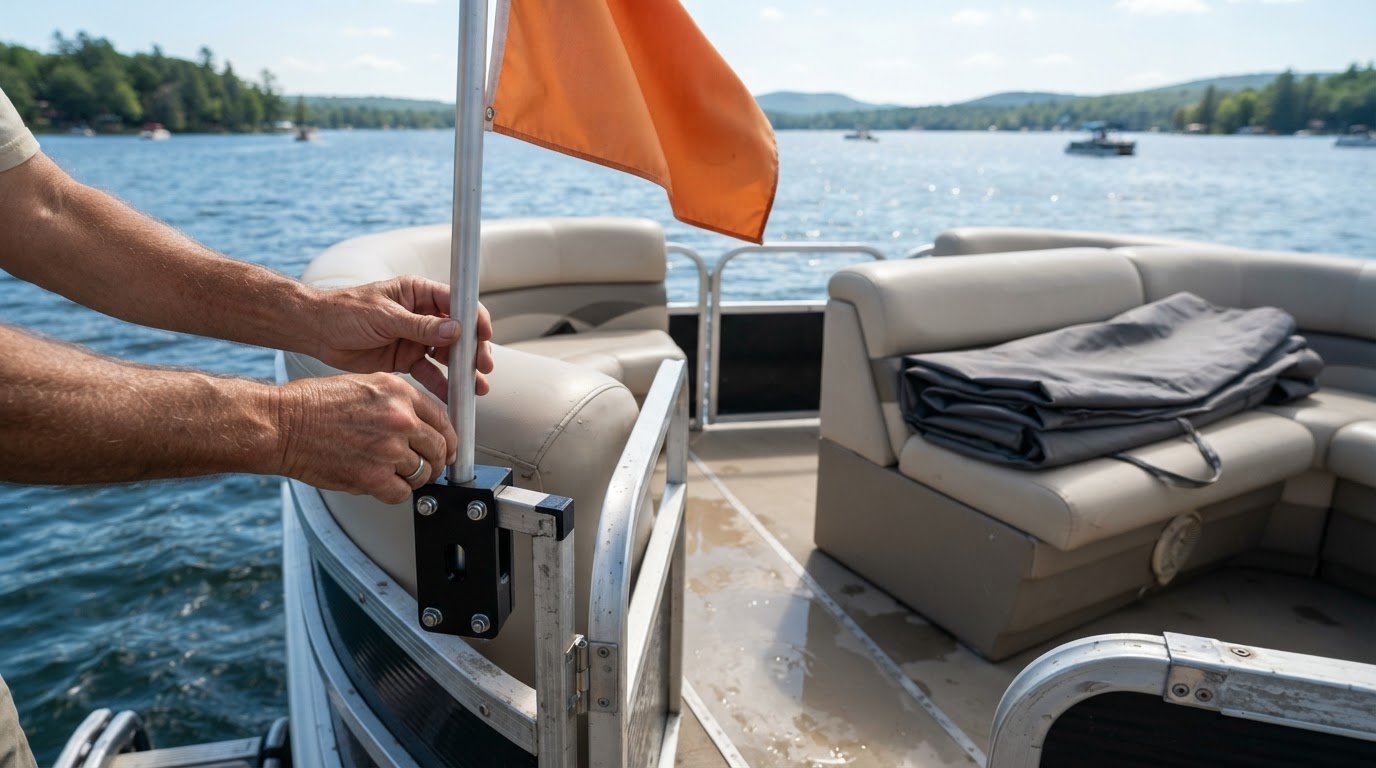
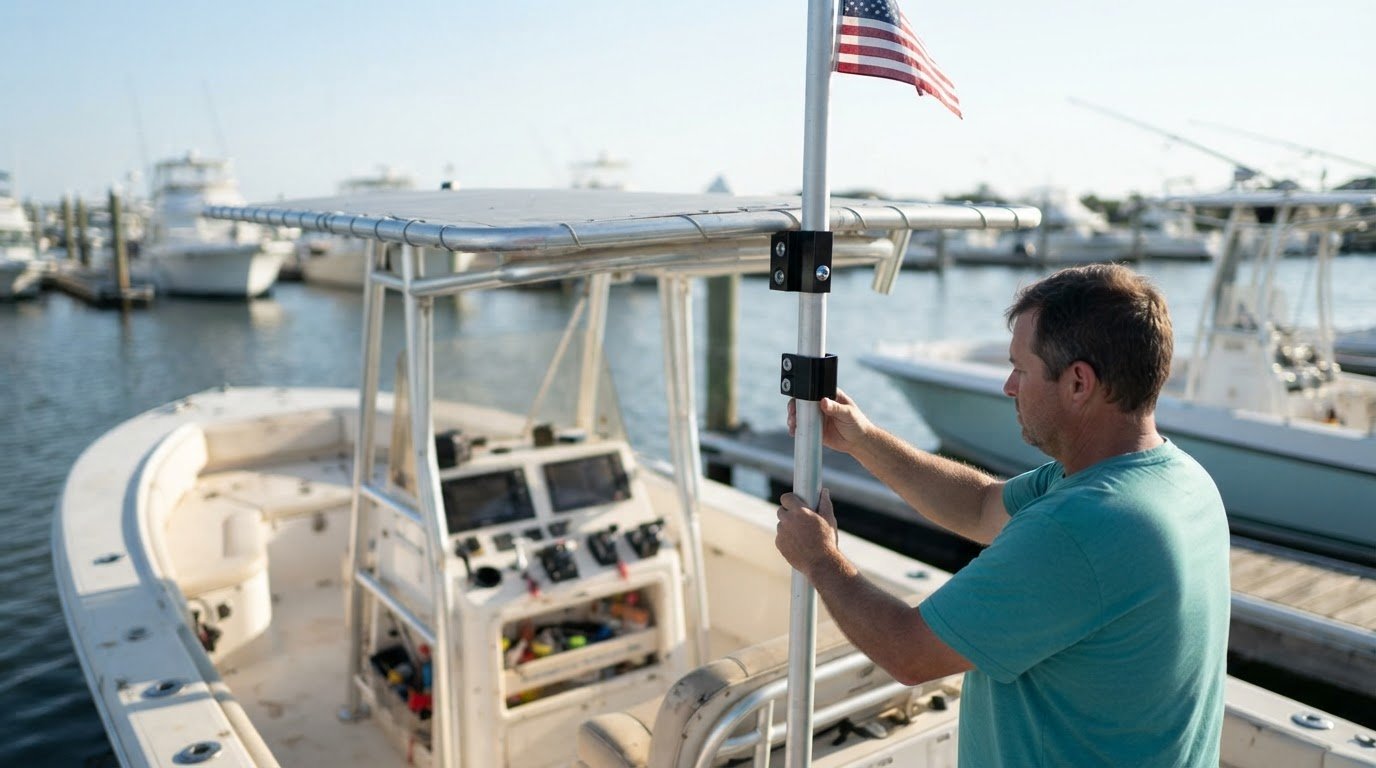
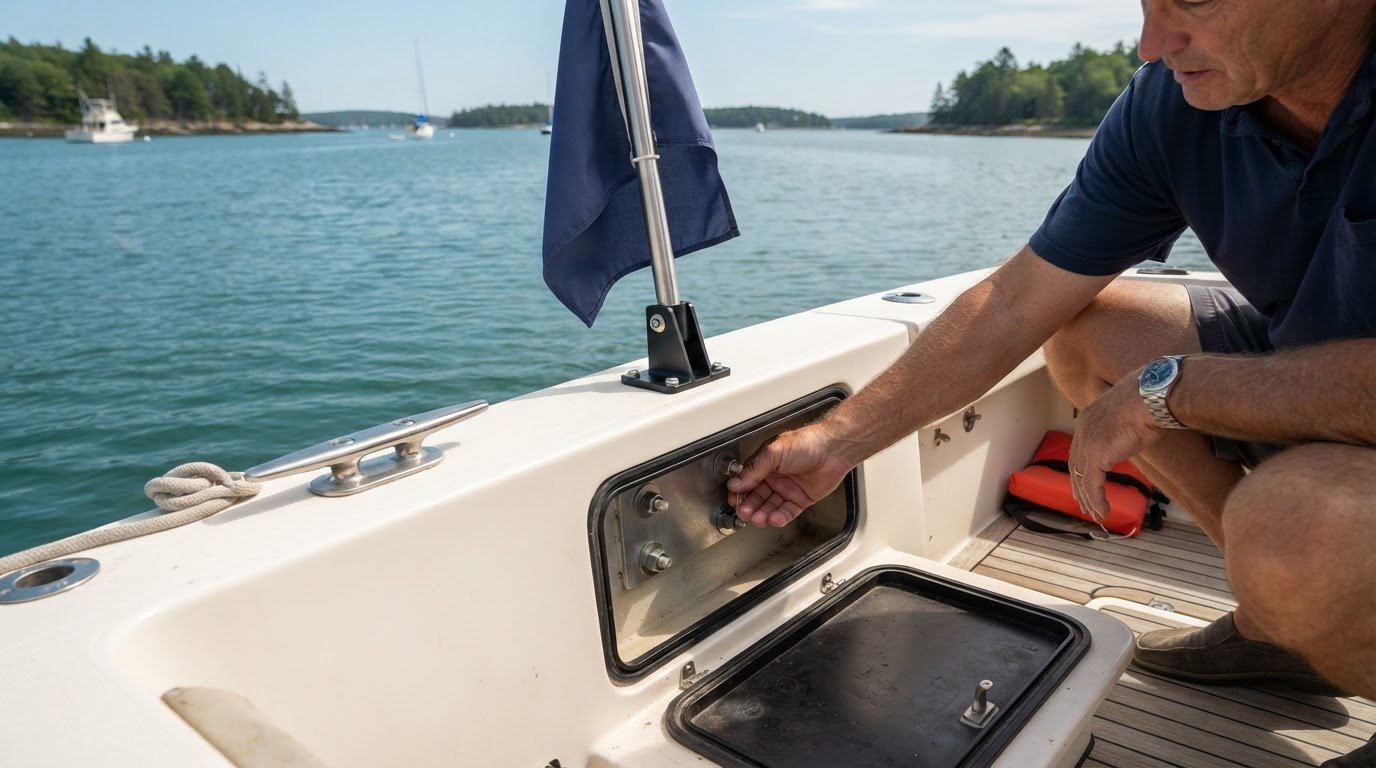
Tower Flags makes custom-fit Flag Pole Brackets and Flag Poles for boat owners. Each bracket is designed and fabricated to order to match a customer’s tower, providing a mounting solution made for the vessel’s marine setting.
Choose a bracket and pole as a coordinated setup for displaying a flag on a vessel. This matters when a standard display does not suit the boat’s mounting requirements or intended use. Pairing the right hardware with a suitable flag creates a complete nautical display, with the mounting point considered from the start.
For a boat flag setup, contact Tower Flags to discuss your needs.
Make Your Next Flag Display a Deliberate Choice
Start by turning your intended use into a clear set of priorities. A home display may need to complement its surroundings, while a boat setup depends on a mounting location suited to the vessel. For a business, the flag can support a deliberate visual identity. The benefits of a purpose-built flag pole are clearest when its role guides your choice from the outset.
Tower Flags offers Flag Pole Brackets, Flag Poles, and Gift Cards. A Gift Card can be a thoughtful option when someone else should choose the display that suits them. For your own setup, consider what you want to display and where you’ll use it, then choose a flag and hardware to match.
Ready to take the next step? Contact Tower Flags to discuss your flag pole. A well-considered display can make your chosen setting feel complete.
Frequently Asked Questions
What are the benefits of a purpose-built flagpole compared with a general-purpose pole?
A purpose-built pole is chosen for its setting, mounting needs, and intended display, rather than treated as a one-size-fits-all option. For a boat, a bracket and pole designed for its tower can provide a better-matched connection. Tower Flags makes custom-fit marine brackets and poles from a high-strength carbon fiber composite. The threaded pole screws directly into the bracket, so installation and removal take seconds.
Which materials are best for a purpose-built flagpole: aluminum, fiberglass, or steel?
No single material suits every location. Aluminum and fiberglass are both used for flagpoles; fiberglass resists rust and corrosion, making it relevant in coastal or humid conditions. Choose a material with the installation environment and display in mind. Consider how moisture, sunlight, and upkeep affect the pole’s surroundings rather than selecting on appearance alone.
What flag size and weight can a purpose-built flagpole safely support?
There is no one size or weight that applies to every flagpole. Support depends on the pole’s dimensions, construction, mounting, and the flag’s exposed area. A larger flag catches more wind, so its size affects the load even when its weight seems modest. Match the flag to the pole’s stated capacity and intended configuration. A boat display should also suit its mounting position and available clearance.
What wind speeds can purpose-built flagpoles withstand?
Wind capacity depends on the individual pole’s dimensions and whether a flag is flying. A rating with a flag attached differs from one without a flag because fabric adds wind load. Read the rating for the exact configuration, including flag dimensions, rather than applying one speed to every pole. Local gust exposure also matters when choosing a setup, and taking the flag down in very windy weather reduces strain.
Comments