

What to Do If You Lose a Flag in the Water: A Reference
A lost flag isn’t worth an unsafe recovery. If you’re deciding what to do if you lose a flag in the water, retrieve it only when it’s clearly visible and within easy reach from a stable, safe position. If depth, current, poor visibility, or underwater obstacles make the approach uncertain, leave it in the water.
It’s natural to want to retrieve a flag right away, especially if it falls off during play or slips from a boat. But shallow-looking water can hide a drop-off, rocks, vegetation, or other hazards, and reaching for an object can put you at risk. Pause, assess the water and your footing, and don’t enter conditions that feel unsafe.
This guide explains how depth and underwater obstacles should shape your decision, what to do when a flag comes loose during play, and when it’s safer to leave it behind. It also explains how a secure flag pole and mounting setup can help keep a boat’s flag in place during use.
Table of Contents
How can you safely retrieve an object from water without putting yourself at risk?
When should you call 911 or a lifeguard for a lost flag in the water?
How do you locate a flag that has drifted away in a lake, river, or ocean?
Who should you contact to recover a flag lost in a public beach, pool, or boating area
How can you safely retrieve an object from water without putting yourself at risk?
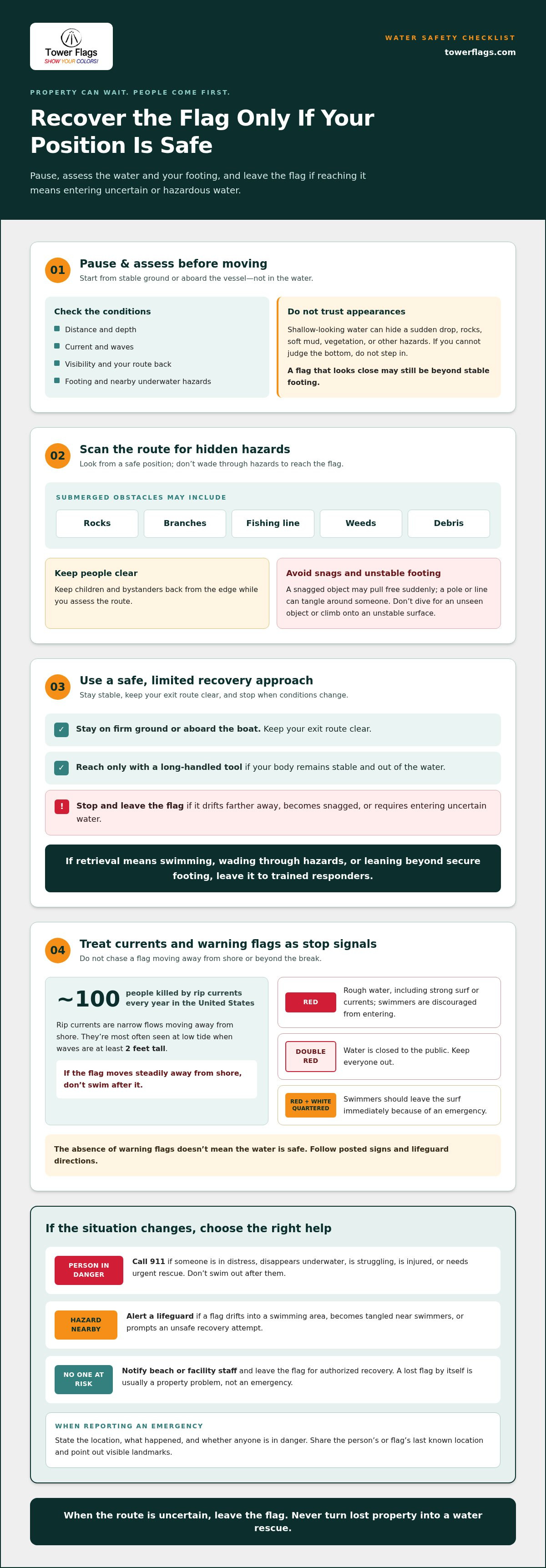
A safe retrieval keeps you on stable ground or aboard a vessel. If you lose a flag in the water, pause first and assess the distance, depth, current, visibility, and route back. Don’t enter the water simply because the flag looks close. Reaching from a secure dock is different from swimming toward an object beyond your footing.
Water depth is the distance from the surface to the bottom. Check whether you can see the bottom and whether the shoreline drops away sharply. A shallow edge can conceal a sudden drop, rocks, or soft mud. If the flag is beyond a stable standing position, use a tool from shore or leave it. Don’t step into water if you can’t judge the bottom.
An underwater obstacle is anything submerged that could catch, cut, or destabilize you. Examples include rocks, branches, fishing line, weeds, and debris. Look for obstacles from shore, but don’t wade through vegetation to reach a flag. A snagged object may pull free suddenly, and a pole or line can tangle around someone. Keep children and bystanders back from the edge while you assess the route.
A rip current is a narrow flow of water moving away from shore. Rip currents kill roughly 100 people every year in the United States. They’re most often seen at low tide when waves are at least 2 feet tall. If the flag floats beyond the break or moves steadily away from shore, don’t swim after it. Watch the water’s movement from a safe position and alert a lifeguard if someone is already in danger.
Use this sequence before attempting any recovery:
Stay on firm ground or aboard the boat, and keep your exit route clear.
Check for waves, current, poor visibility, slippery surfaces, and submerged hazards.
Reach only with a long-handled tool if your body remains stable and out of the water.
Stop if the flag drifts farther away, becomes snagged, or requires you to enter uncertain water.
Depth and obstacles affect the safest choice, even when the water appears calm. A flag beside a clear pool step may be reachable from the deck, while one near a lake’s weed bed may be hidden among branches. Don’t dive for an unseen object or climb onto an unstable surface. If retrieval would require swimming, wading through hazards, or leaning beyond secure footing, leave it to trained responders.
Beach warning flags also matter before anyone enters the water. A red flag indicates rough conditions, including strong surf or currents, and swimmers are discouraged from entering. A double red flag means the water is closed to the public. The absence of warning flags doesn’t mean the water is safe. Follow posted signs and lifeguard directions, and choose safety over recovering property.
When should you call 911 or a lifeguard for a lost flag in the water?
A water emergency is a situation where someone faces immediate danger, injury, or difficulty staying afloat. Call 911 if a person is in distress, disappears underwater, or needs urgent rescue. A lost flag by itself is usually a property problem, not an emergency. Don’t turn it into a rescue by entering hazardous water.
A lifeguard is a trained beach or pool safety professional who can assess local conditions. Alert one if a flag drifts into a swimming area, becomes tangled near swimmers, or prompts someone to enter unsafe water. At a staffed beach, give the lifeguard the flag’s last visible location and direction of movement. At a pool, notify the lifeguard or facility staff instead of reaching into a restricted area.
Rip currents are powerful channels of water moving away from shore. They kill roughly 100 people every year in the United States. They’re most often seen at low tide when waves are at least 2 feet tall. If a person is caught in one, call 911 or alert a lifeguard immediately. Don’t swim out after them. Tell responders where the person was last seen and keep watching from a safe place.
A beach warning flag communicates current hazards to visitors. On beaches using the system, a red flag warns of rough water, including strong surf or currents, while double red means the water is closed to the public. A red-and-white quartered flag means swimmers should leave the surf immediately because of an emergency. Follow posted instructions, even if the lost flag seems easy to retrieve.
Use a clear report when contacting help. State the location, what happened, and whether anyone is in danger. For example, say, “A flag drifted past the swimming area, and someone is entering the water to retrieve it.” If you call 911, describe visible landmarks such as a lifeguard stand, pier, or marked pool entrance. Stay available to point responders toward the last known location.
Call for emergency help if someone is missing in the water, struggling, injured, or unable to reach shore. Alert a lifeguard if the lost flag creates a hazard or draws someone toward dangerous water. If nobody is at risk, tell beach or facility staff and leave the flag for authorized recovery. Keep the focus on people first.
Immediate danger: Call 911 for a person in distress or missing underwater.
Staffed swimming area: Alert the lifeguard about a hazard or unsafe recovery attempt.
Closed water: Obey double-red flags and keep everyone out.
No immediate risk: Notify facility staff rather than entering the water.
How do you locate a flag that has drifted away in a lake, river, or ocean?
The last known position is where someone most recently saw the flag. Start there, then note its direction, nearby landmarks, and whether it stayed on the surface. For example, record whether it passed a dock, buoy, or shoreline marker. This gives everyone searching the same reference point instead of prompting scattered guesses.
A drift path is the route an object follows under wind and water movement. On a lake, watch whether wind pushes the flag toward a particular shore. On a river, observe the downstream flow and check banks or eddies from a safe vantage point. In the ocean, waves, currents, and changing water movement can carry it away from its original line. Don’t assume it will travel straight.
A fixed landmark is a stationary feature that helps you judge an object’s changing position. Choose a pier, lifeguard stand, dock, or distinctive tree, then compare the flag’s location with it. If the flag disappears behind a boat or wave, keep the landmark in view and scan the nearby surface. This helps distinguish a brief visual obstruction from continued drift.
Scan slowly and methodically rather than searching randomly across the water. Start at the last known position and move your eyes across nearby water in overlapping passes. Check the flag’s direction of movement, then scan adjacent areas where wind or current could carry it. If others are present, assign each person a separate area to watch from shore. Keep the search coordinated, and don’t let anyone enter unsafe water.
Lake: Track wind direction and watch the downwind shoreline.
River: Look downstream from a stable bank, including visible eddies.
Ocean: Use a fixed beach landmark and account for waves obscuring sight.
Any water: Recheck the last sighting before widening the scan.
Visibility is how clearly you can distinguish the flag from the surrounding water. Sun glare, shadows, waves, and the flag’s color can make it hard to spot. Move along safe, level ground to change your viewing angle, or use binoculars if available. Don’t lean over a steep bank or climb onto a slippery rock for a better view.
Set a clear search boundary using visible landmarks at both ends of the area. For instance, scan between a boat ramp and a pier, then widen the search only if the flag’s movement suggests it went beyond them. Ask a lifeguard or boating-area staff member to help track the last sighting if available. If the flag becomes hard to see or moves beyond safe reach, stop searching from the water’s edge and leave recovery to appropriate personnel.
What equipment can help retrieve a floating flag safely
A reaching pole is a long, rigid tool used to draw an object toward shore or a boat. Use one only while standing on a stable surface. Extend it toward a flag near a dock, pool edge, or boat side, then pull steadily. Don’t lean past a railing or step onto an unstable surface for extra reach.
A boat hook is a pole with a blunt hook designed to catch ropes or objects. From a secured boat, guide the hook toward the flag’s fabric, loop, or pole, then bring it alongside slowly. Avoid hooking a person or pulling hard against a snag. If the flag is beyond controlled reach, don’t maneuver the boat into rough water to chase it.
A landing net is a handled net used to scoop small floating objects from nearby water. It can work for a loose fabric flag close to a pool deck or shoreline. Approach from firm footing and lift gently, since a wet flag can catch water and pull against the net. Don’t use a net as a reason to wade farther or reach over deep water.
A throw line is a rope designed to be tossed to someone who needs help. It isn’t a flag-retrieval tool for an untrained person to use from a moving boat. Don’t tie a line around your body or attach yourself to a floating object. If someone is in danger, alert a lifeguard or call 911, then follow their instructions.
Personal flotation equipment helps keep a boater afloat if they’re already aboard and conditions change. Wear an appropriate flotation device before working near the water from a vessel. Keep the boat stable, use a secure handhold, and avoid leaning over the side while reaching. If the flag moves beyond the boat’s safe working area, stop rather than repositioning into hazardous conditions.
Choose the tool based on where the flag is and how securely you can stand:
Near a pool edge: Use a pool skimmer or reaching pole from the deck.
Beside a dock: Use a boat hook while remaining behind a secure edge.
Next to a secured vessel: Use a hook or net without leaning overboard.
Beyond safe reach: Leave recovery to lifeguards or responsible boating-area staff.
Inspect each tool before use. A cracked pole, loose handle, torn net, or tangled line can fail during a pull. Keep children and bystanders clear of the retrieval area, and place the recovered flag on a stable surface. Equipment extends your reach, but it doesn’t eliminate risks from current, depth, slippery footing, or hidden obstacles. Stop if you lose secure footing or control.
Who should you contact to recover a flag lost in a public beach, pool, or boating area
A site operator is the person or team responsible for managing a public facility. At a beach, tell the lifeguard or beach staff where the flag went and whether anyone is entering the water. At a pool, notify the lifeguard or front desk. Staff can manage access and decide whether to retrieve the flag.
A lifeguard is a trained responder who monitors swimmers and local water conditions. Contact one if the flag drifts into a swimming zone, blocks access, or draws someone toward unsafe water. Give a clear location, such as “just past the pier on the left.” If someone is in immediate danger, call 911 instead of focusing on the flag.
A pool operator is responsible for the pool’s daily operation and safety procedures. Report a flag that has fallen into a public pool, especially if it is near a drain, lane, or restricted area. Don’t climb over a barrier or enter a closed pool to retrieve it. Follow the facility’s directions and identify the flag’s last visible location.
A marina or harbor office manages services and activity within a boating facility. Tell its staff if a flag has drifted near a dock, launch area, or vessel traffic. Share the flag’s color, shape, and last known position. If the flag marks diving activity, avoid approaching it. Boaters on inland waters should stay at least 100 feet from a diver-down flag. In bays and open waters, stay at least 300 feet away.
A public beach’s warning system communicates local water hazards. Systems vary by location, so follow that beach’s posted signs and lifeguard instructions. Public beaches using a standardized warning system must follow established regional or state safety programs. If a double red flag is displayed, the water is closed to the public. Don’t enter to retrieve anything.
Give staff useful details when reporting a lost flag:
Location: Name a pier, pool entrance, dock, or other visible landmark.
Movement: Describe whether wind, waves, or river flow carried it away.
Appearance: Note the flag’s color, size, and attached pole or hardware.
Risk: Say whether someone is entering the water or the flag is near swimmers.
For an ordinary lost flag, facility staff or the boating-area office is the appropriate first contact. For a person in distress, call 911 or alert a lifeguard immediately. Keep others out of restricted water and let staff coordinate recovery. If you’re preparing a boat for future outings, plan a secure flag setup before the next launch.
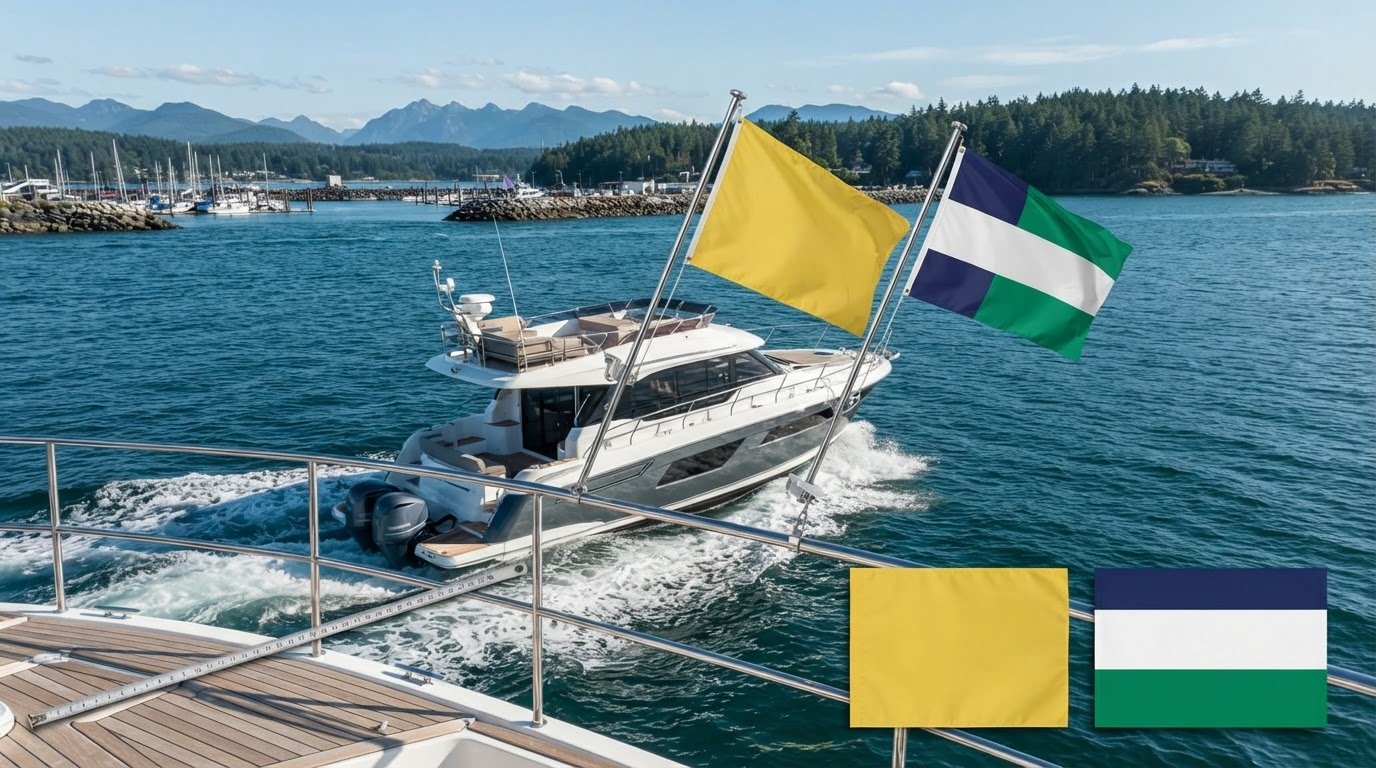
A quartered black-and-white flag marks an area for surfboards and other nonpowered watercraft; swimmers should stay out. A purple flag warns of marine animals that can cause minor injuries, such as jellyfish and stingrays. A red-and-yellow flag marks an area protected by lifeguards and closely supervised. Across public beach systems, green indicates low hazard and calm conditions, but beachgoers should still exercise caution. At many coastal and Great Lakes beaches, double red means water access is closed; visitors should not enter. Yellow indicates medium hazard from moderate surf and/or currents; visitors should watch for dangerous currents and high waves.
Tower Flags: Flag Pole Brackets
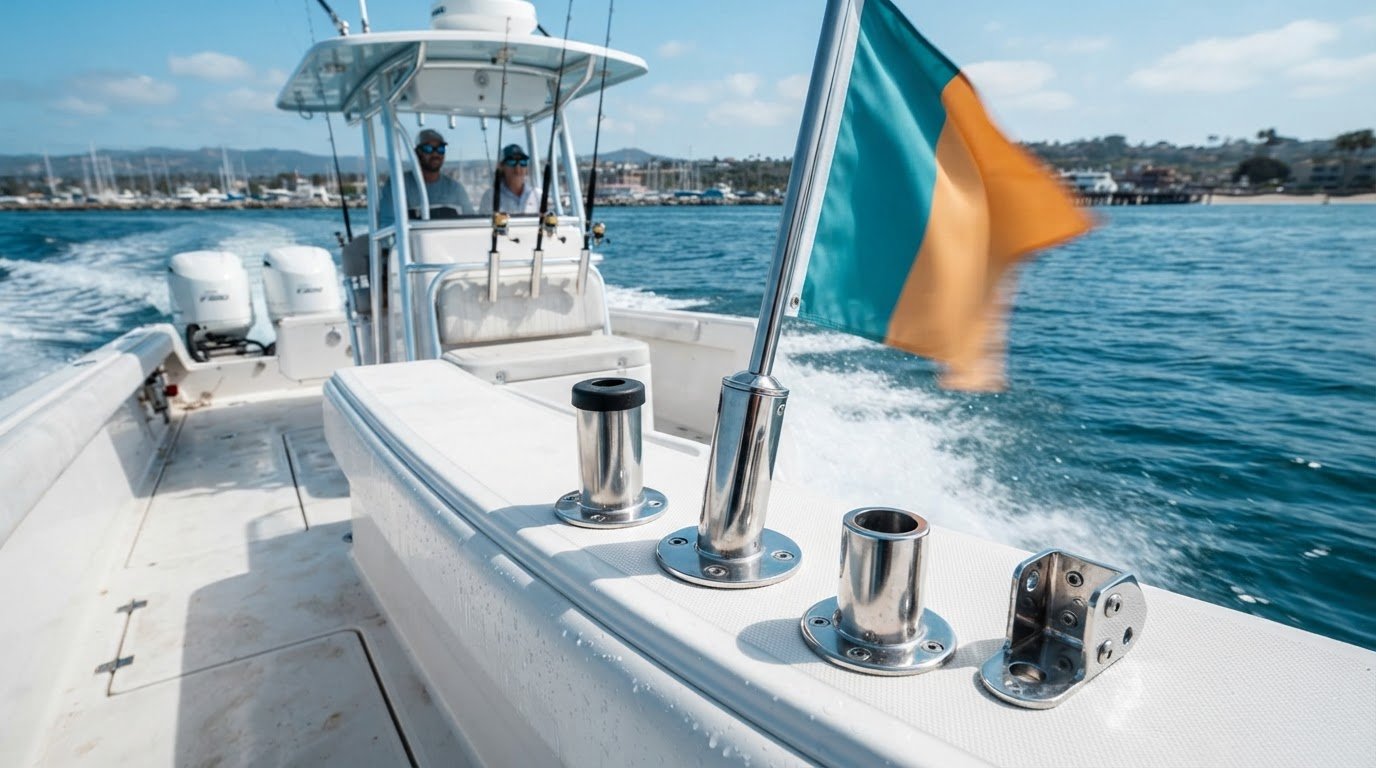
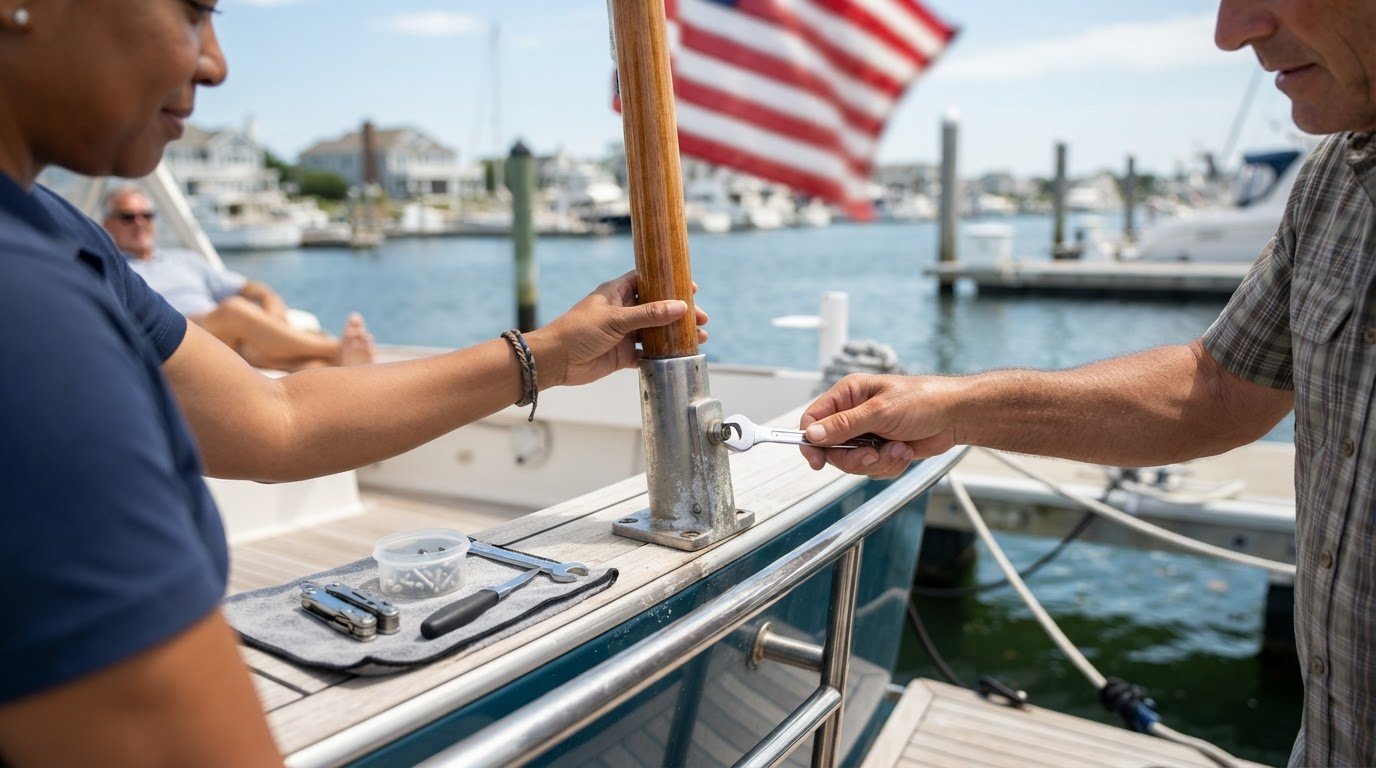
Tower Flags offers Flag Pole Brackets for boat owners planning a dependable flag setup. Its custom mounting solutions are tailored to marine environments, helping hold a flag pole in position on a vessel. If a lost flag has exposed a loose or unsuitable mounting arrangement, consider whether the bracket and pole fit the way you intend to display your flag.
Tower Flags also makes Flag Poles and offers Flags, so you can choose the components for your boat’s display. These products help with setup, not recovery from unsafe water. Leave a flag behind rather than entering hazardous conditions to retrieve it. For a custom boat flag mounting setup, contact Tower Flags.
Make your next outing a more confident one
Knowing what to do if you lose a flag in the water can help you make a safer choice in the moment. For your next outing, consider how the flag is mounted and whether its pole suits your vessel and intended display. A well-planned setup won’t remove every risk on the water, but it can help keep your flag display ready for use.
Tower Flags offers Flag Pole Brackets and Flag Poles for boat owners planning a marine flag setup, along with Flags and Gift Cards. Choose the components that suit your intended display, and keep safe recovery decisions separate from equipment replacement. If you’re ready to plan your setup, contact Tower Flags for help.
Choose a flag mount and pole made to fit your boat, then display your flag with care and confidence.
Frequently Asked Questions
What should you do immediately if you lose a flag in the water?
First, keep everyone safe and note where the flag went. If you're deciding what to do if you lose a flag in the water, don’t reach or jump after it. On a boat, alert the operator without distracting them from controlling the vessel, and note a nearby landmark. If a pole or loose hardware remains, secure it so it doesn’t shift or fall. Tell a lifeguard or facility staff if the flag enters a public swimming area.
Comments